Last Reviewed on: January 9, 2026
Disclaimer: The availability of these samples is subject to brand inventory and regional variability. While these programs were active as of early 2026, some may be limited to the United States, Canada, or the United Kingdom. Always check the specific terms of each program before participating.
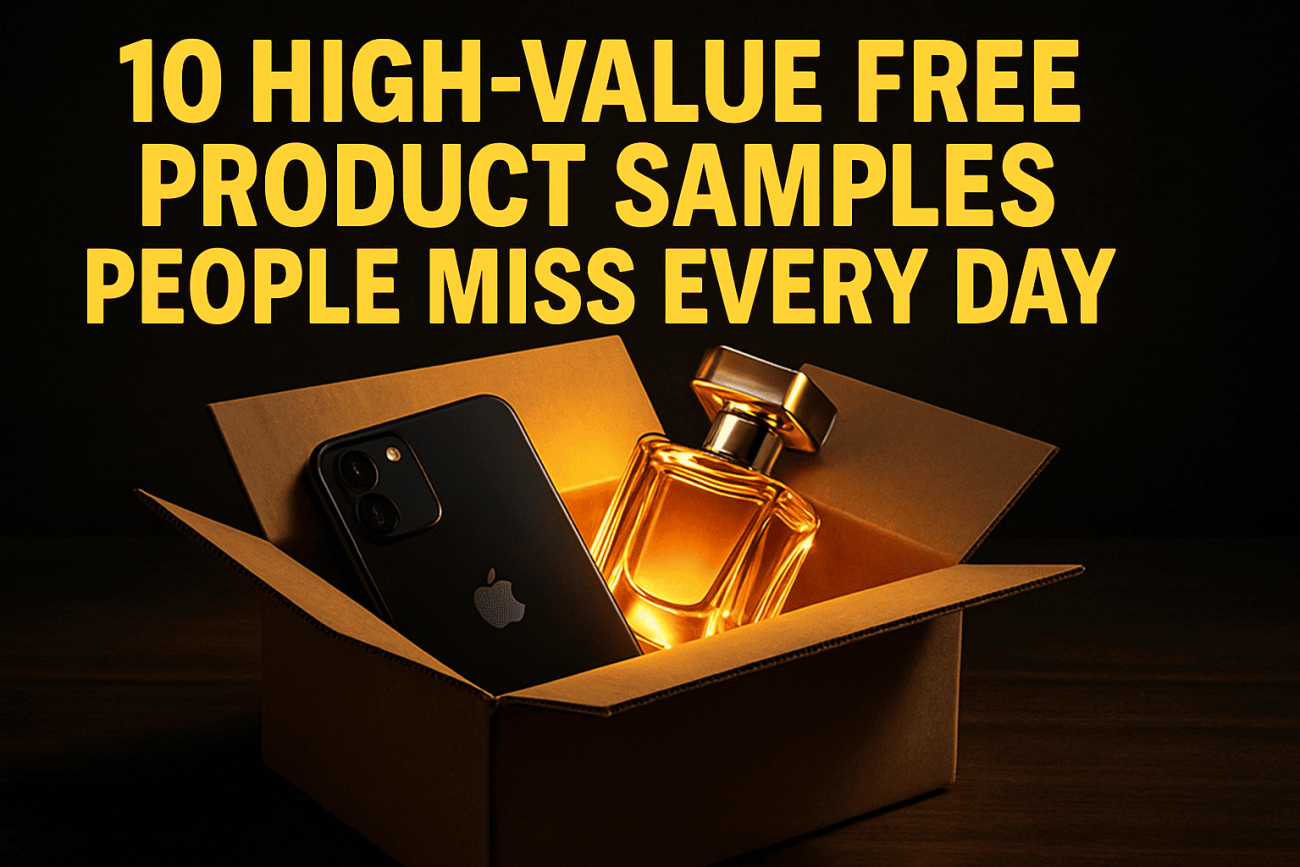
In the world of freebies, there is a massive difference between a tiny foil packet of shampoo and a $50 “Welcome Box” filled with full-size products. Most beginners spend their time chasing low-value samples that barely last a single use. However, there is a “hidden tier” of high-value sampling that most people miss every day simply because they don’t know where to look or how to ask. This guide uncovers 10 of the most valuable free product opportunities available in 2026, along with the realistic strategies you need to secure them.
Who This Is For / Not For
| This Is For You If… | This Is Not For You If… |
|---|---|
| You want full-size or “deluxe” travel-size products. | You are looking for “instant” gratification without effort. |
| You are willing to provide feedback or join a loyalty program. | You are uncomfortable sharing basic demographic data. |
| You want to test premium brands before committing to a purchase. | You expect “free” to mean “no shipping costs” in every case. |
| You are organized enough to manage registries and newsletters. | You are looking for a “get rich quick” scheme. |
1. The “Consultation” Luxury Beauty Sample
Many people walk right past the beauty counters at high-end department stores like Macy’s, Nordstrom, or Saks Fifth Avenue, assuming that everything behind the glass is strictly for paying customers. However, luxury brands like Estée Lauder, Clinique, and Lancôme have a long-standing corporate policy of providing “shade matches” or “skin consultations.”
The logic is simple: these brands know that their products are an investment. A customer is unlikely to drop $120 on a “Night Repair Serum” without knowing if it will cause a breakout. If you approach a consultant and politely ask for a sample of a specific foundation or serum to “see how it reacts with your skin over a few days,” they will often provide a 7-day supply in a small, reusable jar. This is a high-value opportunity because a 7-day supply of a premium serum can be worth $15-$25 on its own.
The Strategy: Go during “off-peak” hours (like a Tuesday morning) when the consultants aren’t busy. Be honest about your skin concerns. If you show genuine interest in the brand’s science, they are much more likely to be generous with deluxe samples.
The Trade-off: You have to engage in a face-to-face conversation, which can be intimidating for some. You will also likely be asked to join their loyalty program or provide an email address for follow-up marketing.
2. Full-Size Natural Products via Social Nature
Social Nature is a platform that has revolutionized the sampling industry by focusing on “Better-for-You” brands. Unlike traditional sites that send tiny foil packets in the mail, Social Nature provides digital or physical vouchers for full-size products. We are talking about entire bottles of organic kombucha, full boxes of plant-based pasta, or jars of eco-friendly face cream.
The process is straightforward: you apply for “missions” based on your demographic profile and shopping habits. If selected, you are given a voucher to be used at a local retailer like Whole Foods, Sprouts, or Target. You simply pick up the item during your regular grocery run and “pay” with the voucher at the register.
The Strategy: Keep your profile updated. Brands on Social Nature are often looking for very specific types of consumers (e.g., “People who currently buy almond milk but want to try oat milk”). The more detailed your profile, the more missions you will qualify for.
The Trade-off: In exchange for the $10-$15 product, you are legally and ethically required to leave an honest review on their platform. You may also be asked to share a photo of the product on social media, though this is often optional.
3. The “Registry” Welcome Boxes: The $150 Secret
This is perhaps the most lucrative high-value freebie in the entire industry. Major retailers like Amazon, Target, and Walmart compete fiercely for the business of new parents. To win them over, they offer “Welcome Boxes” that are genuinely impressive.
The Amazon Baby Registry Box, for example, often includes a full-size Dr. Brown’s bottle, a SwaddleMe wrap, and a variety of premium samples from brands like La Roche-Posay and Aquaphor. When you combine the boxes from Amazon, Target, and Walmart, the total value of free products can easily exceed $150.
The Strategy: You don’t necessarily need to be currently expecting to create a registry. Many people create registries to organize future needs, for a “baby shower” they are hosting for a friend, or simply to take advantage of the “completion discount” (usually 15% off) later. To unlock the Amazon box, you typically need to be a Prime member and have $10 worth of items purchased from your registry (which you can buy yourself).
The Trade-off: You are providing these retailers with a very clear signal of your life stage. Expect to see a significant increase in baby-related advertisements across your digital life for the next 12-18 months.
4. Specialized Health and Medical Kits
Companies that produce specialized health products, such as Depend or Poise, offer some of the most robust sample kits on the market. Because these are sensitive products, brands are eager to help you find the right fit.
These kits often arrive in discreet packaging and include multiple product types, high-value coupons (sometimes for $5 off a full pack), and educational materials.
The Trade-off: You are providing sensitive health-related demographic data to the brand.
5. Professional Art and Craft Supplies
High-end art brands like Liquitex or Winsor & Newton occasionally offer sample packs of their newest innovations—such as acrylic gouache or professional-grade markers. These are highly coveted by the creative community.
The Strategy: Sign up for the “Pro” or “Artist” newsletters on these brand websites. They often send out limited-time sample requests to their most engaged subscribers before a major product launch.
Summary of High-Value Opportunities
| Opportunity | Estimated Value | Primary Requirement | Best For |
|---|---|---|---|
| Luxury Beauty | $15 – $25 | In-person consultation | Skincare/Makeup lovers |
| Social Nature | $5 – $15 | Honest online review | Grocery shoppers |
| Registry Boxes | $35 – $50 | Registry creation + $10 spend | New/Future parents |
| Health Kits | $10 – $15 | Demographic survey | Specialized health needs |
| Art Supplies | $10 – $20 | Newsletter subscription | Creatives/Artists |
6. Premium Coffee and Tea Subscription Trials
The “Third Wave” coffee movement has led to a surge in high-end subscription services like Trade Coffee or Atlas Coffee Club. To get you hooked on their curated beans, they often offer your first bag (a $15-$20 value) for free.
The Trade-off: This is almost always an “Opt-Out” trial. You must provide credit card info and cancel the subscription before the next billing cycle if you don’t wish to continue.
7. High-End Fragrance via “SoPost”
SoPost is a specialized sampling platform used by luxury fragrance houses like Dior and Armani. They use advanced targeting on social media to find their ideal customers.
The Strategy: If you follow these brands on Instagram or TikTok and engage with their content, you are more likely to see a “Sponsored” post offering a free sample of their latest perfume. These are often deluxe spray vials, not just “scent strips.”
8. Eco-Friendly Cleaning Starter Sets
Brands like Blueland and Grove Collaborative are on a mission to reduce plastic waste. They often offer “Free Starter Sets” to new customers. These sets can include high-quality glass spray bottles and several cleaning tablets.
The Trade-off: These are usually “Free with Purchase” or require you to pay a shipping fee of $5-$10. However, the value of the glass bottles alone often exceeds the shipping cost.
9. Premium Pet Food for Specialized Diets
If you have a pet with specific needs, brands like Royal Canin or Hill’s Science Diet are incredibly generous with samples. They understand that switching a pet’s diet is a big decision.
The Strategy: Use the “Contact Us” form on their website to ask for a sample of a specific formula (e.g., “Sensitive Digestion”). Mention that your vet recommended the brand but you want to ensure your pet likes the taste before buying a large bag.
10. Tech and Developer “Swag”: High-Quality Gear
Major tech companies like Google Cloud, Microsoft Azure, and Salesforce often run “Learning Challenges” or “Certification Quests.” These are designed to train the next generation of tech workers, but they come with a fantastic perk: high-quality “swag.”
We aren’t talking about cheap plastic pens. These companies often send out premium YETI tumblers, high-end Bella+Canvas t-shirts, and even hardware like YubiKeys (security keys worth $50+). During a recent “Google Cloud Skills Boost” event, participants received a high-quality backpack just for completing a series of free labs.
The Strategy: Follow the “Developer Relations” or “Community” blogs of major tech firms. Look for terms like “30-Day Challenge” or “Skills Quest.” You don’t need to be a professional coder to participate; many of these tracks are designed for absolute beginners.
The Trade-off: This requires a significant time investment. You might spend 5-10 hours completing the required modules. However, you gain a new skill and high-value gear, making it a win-win for many.
Advanced Playbook: How to Never Miss a High-Value Sample
If you want to move from a “beginner” to an “intermediate” freebie seeker, you need to adopt a more systematic approach.
1. The “Direct Outreach” Method
If there is a premium brand you truly love, don’t wait for a sample to appear. Write a polite, well-crafted email to their customer service team.
- Do: Mention a specific product you are interested in.
- Do: Explain why you want to try it (e.g., “I have very sensitive skin and I’ve heard your mineral sunscreen is the best”).
- Don’t: Just ask for “free stuff.”
Brands like Lush and Kiehl’s are famous for their generous response to thoughtful customer inquiries.
2. The “Social Listening” Strategy
In 2026, algorithms are your best friend. If you want high-end beauty samples, start interacting with beauty content.
- Follow Sephora and Ulta on social media.
- “Like” and comment on posts from luxury brands.
- Search for specific products on Google.
This behavior triggers “Targeted Sampling” ads via platforms like SoPost. You’ll start seeing “Get a Free Sample” buttons in your feed that other people never see.
3. The “Birthday” Goldmine
Almost every high-value brand has a “Birthday Reward.” Brands like Sephora offer a “Birthday Gift” that is usually a deluxe set of 2-3 products valued at $15-$20. Starbucks gives you a free drink of any size (get the Venti!). If you sign up for 20-30 of these loyalty programs, your birthday month becomes a high-value freebie festival.
The “Cost” of High-Value Samples: Privacy and Time
It is essential to remain transparent about why these companies are giving away $50 boxes. In the digital economy of 2026, there is no such thing as a truly “free” lunch.
- Data is Currency: When you create a registry or a health profile, you are providing the brand with a roadmap of your future spending. This data is used to build “predictive models” that determine which ads you see and even what prices you are offered in the future.
- The “Hook” Strategy: High-value samples are a calculated business investment. Companies like Royal Canin know that if your pet likes their food, you might spend $1,000+ a year on it for the next decade. They are willing to lose $10 today to gain $10,000 over the life of your pet.
- The “Review” Economy: Platforms like Social Nature use your reviews to build “social proof.” Your honest feedback is used in their marketing materials to convince thousands of other people to buy the product at full price. You are essentially a micro-influencer, and the sample is your “payment.”
Final Verdict: Quality Over Quantity
In 2026, the most successful freebie seekers are those who focus on quality over quantity. Chasing 100 tiny foil packets will leave you with a cluttered bathroom and very little actual value. However, by targeting the 10 high-value opportunities listed in this guide, you can fill your home with premium products that actually provide value.
The key is to be proactive: join the right newsletters, engage with your favorite brands on social media, and don’t be afraid to ask for a sample during a professional consultation. The “hidden tier” of freebies is waiting—you just have to know where to look. Remember, the best things in life might be free, but the high-value things in life usually require a little bit of strategy.
Community Insights: Real-World Success Stories
To provide a realistic view of these high-value samples, we have summarized common experiences from the community. Note: The author of this article did not participate in these specific interactions; these are summaries of publicly shared experiences from platforms like Reddit’s r/freebies and The Freebie Guy community.
A recurring theme among successful “freebie hunters” is the importance of politeness. One community member shared on Reddit that they received a full-size $80 night cream simply by writing a thoughtful email to a brand’s customer service team expressing how much they loved a previous (smaller) sample.
Another user on The Freebie Guy noted that the Amazon Baby Box is the “gold standard” of freebies, but warned that you must be a Prime member to qualify. The general consensus is that while these high-value items take more work to find, the “Return on Effort” is significantly higher than chasing 50-cent samples.
The “Cost” of High-Value Samples: Privacy and Time
It is essential to remain transparent about why these companies are giving away $50 boxes.
- Data is Currency: When you create a registry or a health profile, you are providing the brand with a roadmap of your future spending.
- The “Hook” Strategy: High-value samples are designed to create brand loyalty. Companies like Royal Canin know that if your pet likes their food, you might spend $1,000+ a year on it for the next decade.
- Feedback Loops: Platforms like Social Nature use your reviews to convince other people to buy the product. You are essentially a micro-influencer for the brand.
Final Verdict: Quality Over Quantity
In 2026, the most successful freebie seekers are those who focus on quality over quantity. By targeting the 10 high-value opportunities listed in this guide, you can fill your home with premium products that actually provide value.
The key is to be proactive: join the right newsletters, engage with your favorite brands on social media, and don’t be afraid to ask for a sample during a professional consultation. The “hidden tier” of freebies is waiting—you just have to know where to look.