Last Reviewed on: January 9, 2026
Disclaimer: The effectiveness of sampling programs and the legitimacy of websites are based on early 2026 data. Regional variability is significant; many of the “best sites” listed are primarily active in the United States, Canada, and the United Kingdom. Always review the Privacy Policy of any site before sharing your personal information.
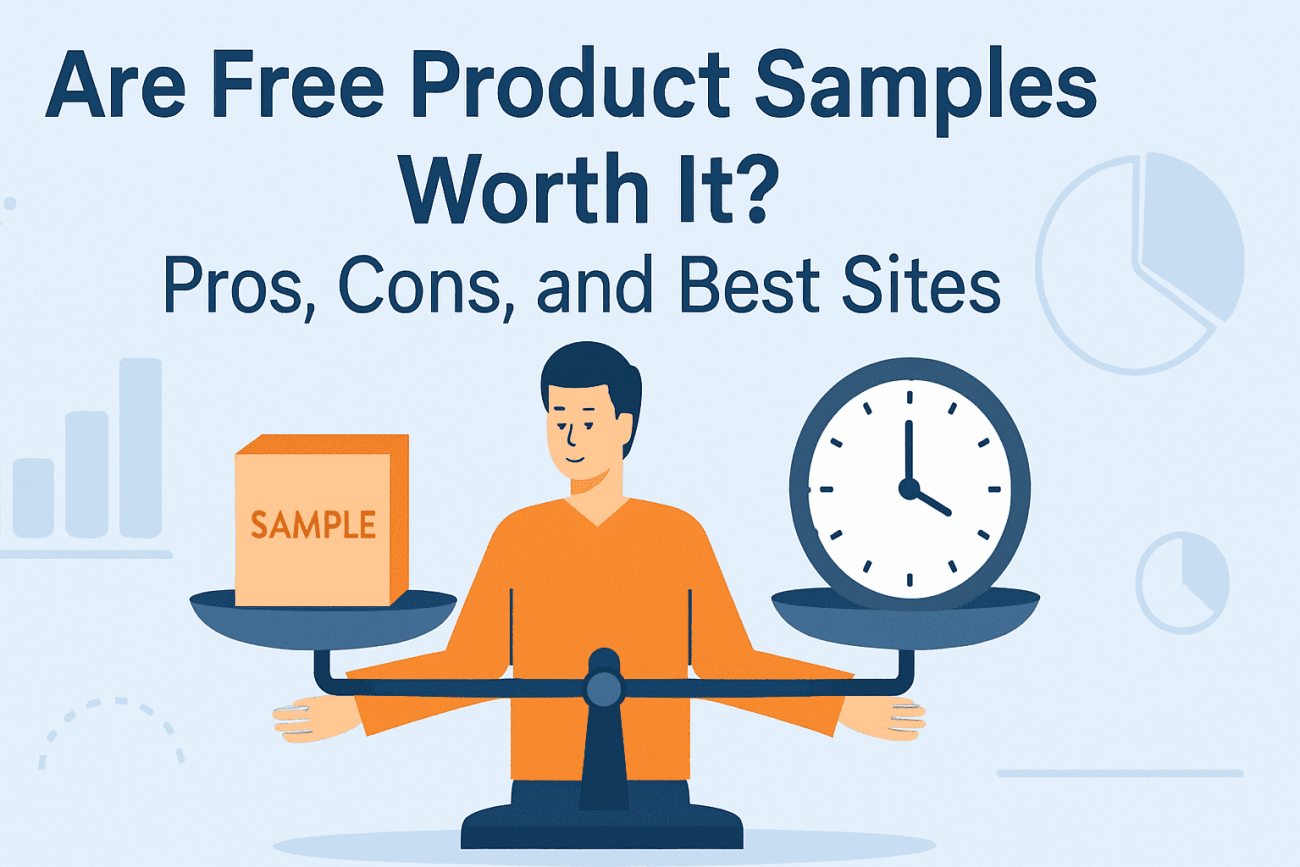
The allure of getting something for nothing is a powerful human instinct. From the legendary Costco snack aisles to the digital “VoxBoxes” of Influenster, free product sampling has become a multi-billion dollar industry. But for the average consumer, a critical question remains: Is the time, effort, and data you “spend” to get these freebies actually worth the value of the products you receive? To answer this, we must look past the “unboxing” videos and analyze the real-world trade-offs of the sampling hobby in 2026.
Who This Is For / Not For
| This Is For You If… | This Is Not For You If… |
|---|---|
| You enjoy trying new products before they hit the shelves. | You are looking for a way to “get rich” or replace an income. |
| You have 15-30 minutes of spare time a week for a hobby. | You are highly protective of your demographic data. |
| You are comfortable leaving honest reviews online. | You expect high-value electronics for $0 with no effort. |
| You want to save money on household and beauty essentials. | You are easily frustrated by “out of stock” notifications. |
The “Pros”: Why Millions of People Do It
For many, the “freebie” hobby is more than just getting a free tube of toothpaste; it’s about discovery, community, and smart consumerism.
1. Risk-Free Discovery: The “Try Before You Buy” Revolution
The most significant benefit of free samples is the ability to “test drive” a product before committing your hard-earned money. In an era where a single bottle of premium foundation or a box of eco-friendly laundry pods can cost upwards of $30, the financial risk of a “bad purchase” is real. According to a 2025 study by WiziShop, nearly 81% of consumers are more likely to purchase a product after receiving a free sample.
This isn’t just about saving money; it’s about finding products that actually work for your specific needs. For someone with sensitive skin or specific dietary restrictions, a free sample is a safe way to navigate a crowded marketplace without the frustration of “buyer’s remorse.”
2. Significant Household Savings: The “Stacking” Strategy
While a single sample might only be worth $1 or $2, a consistent “sweeper” or “freebie hunter” can save hundreds of dollars a year. The real value often isn’t in the sample itself, but in the high-value coupons that come with it. Many brands include “$2 off” or even “Buy One Get One Free” coupons in their sample mailers.
By “stacking” these coupons with store sales at retailers like Target or Walmart, you can effectively reduce your grocery and personal care budget by 10-15%. Over a year, for a typical family, this can equate to $500-$1,000 in realized savings.
3. The “Insider” Experience: Influencing the Brands
Platforms like Home Tester Club, BzzAgent, and Influenster give you access to products before they are available to the general public. This “insider” status is a significant psychological reward for many. You aren’t just a passive consumer; you are a “product tester” whose feedback is heard by major brands like Procter & Gamble, Unilever, and L’Oréal.
In 2026, brands are more desperate than ever for “authentic” user-generated content (UGC). By providing honest reviews, you are helping shape the future of the products that end up on store shelves. For many in the community, this sense of contribution is more valuable than the product itself.
4. Educational Value: Learning About Ingredients
The sampling hobby often leads to a more educated consumer base. When you receive a sample of a “clean beauty” product or a “bio-based” cleaner, you are more likely to read the ingredient list and understand the science behind the marketing. This “accidental education” helps you make better choices for your health and the environment in the long run.
The “Cons”: The Hidden Costs of “Free”
In the digital economy of 2026, “free” is rarely truly free. There are three major “costs” that every beginner must consider.
1. The Time-to-Value Ratio: Is Your Time Worth $5/Hour?
The most common pitfall for beginners is failing to account for the “cost” of their time. Finding, applying for, and reviewing samples is a process. If you spend two hours a week scouring directories and filling out forms to receive $10 worth of samples, your “hourly rate” is $5.
For some, this is a relaxing hobby to do while watching TV or commuting. However, if you are doing it purely for the financial gain, you might find that a part-time job or even “micro-tasking” sites offer a better return on investment. The key to making sampling “worth it” is to focus on “High-Value” programs (like Social Nature) rather than “Foil Packet” sites that only send tiny, one-use samples.
2. The Privacy Trade-off: You Are the Currency
In the digital economy of 2026, data is the new oil. When you sign up for a site like PINCHme or SampleSource, you aren’t just a customer; you are the currency. These companies collect extensive data on your age, household income, shopping habits, and even your health concerns.
This data is used to build “consumer profiles” that are incredibly valuable to brands. While most legitimate sites have strict privacy policies, your data is still being used to target you with advertisements across the web. In 2026, a study by Qualtrics found that 82% of consumers cite “privacy and data use” as their primary concern when interacting with brands online. You must decide if a $2 sample is worth the “digital footprint” you are leaving behind.
3. The “Spam” Factor and Data Security
Expect your inbox to be flooded. Even the most legitimate sites will send 3-5 marketing emails a week. Furthermore, every time you share your data with a new platform, you are increasing your “attack surface” for potential data breaches. While major platforms have robust security, smaller “freebie blogs” or fly-by-night sampling sites may not. This is why using a dedicated “burner” email and a unique password for every site is not just a tip—it’s a requirement for safety in 2026.
4. The “Review” Burden: Unpaid Labor?
Many high-value programs require you to leave a review, post on social media, or even film an “unboxing” video. While this can be fun, it can also start to feel like “unpaid labor.” If a brand sends you a $15 product but expects a 200-word review and three Instagram stories, they are getting a massive discount on marketing. You must ensure that the “work” required doesn’t outweigh the joy of the “gift.”
The Best Vetted Sites for 2026
If you’ve weighed the pros and cons and decided to dive in, these are the most reliable and high-value platforms active in 2026.
| Site Name | Best For… | Value Level | Effort Level |
|---|---|---|---|
| SampleSource | Seasonal “Mega-Boxes” | High | Low (Twice a year) |
| Social Nature | Full-size Natural Products | High | Medium (Retail pickup) |
| Influenster | Luxury Beauty & Lifestyle | Very High | High (Social sharing) |
| Send Me a Sample | Frictionless Voice Sampling | Medium | Very Low (Alexa/Google) |
| PINCHme | Monthly Variety Boxes | Medium | Medium (Feedback req.) |
| The Freebie Guy | Real-time Vetted Alerts | Variable | Low (Directory) |
Community Insights: Is It Actually Worth It?
To provide a realistic perspective, we have summarized common experiences from the freebie community. Note: The author of this article did not participate in these specific interactions; these are summaries of publicly shared experiences from platforms like Reddit’s r/freebies and Trustpilot.
A common sentiment among long-term “freebie hunters” is that the hobby has a “learning curve.” One user on Reddit shared: “In my first month, I signed up for everything and got a lot of junk and a lot of spam. Now, I only stick to SampleSource and Social Nature. I get fewer things, but they are things I actually use, like full-size laundry pods and premium coffee.”
Another user on Trustpilot warned about the “Review Fatigue.” They noted that while getting a $100 skincare set for free was amazing, the requirement to post on Instagram, TikTok, and the brand’s website felt like “unpaid labor.” Their advice? “Only apply for things you are genuinely excited to talk about.”
Actionable Playbook: How to Maximize Your “Worth”
If you want to ensure your time is well-spent and your privacy is protected, follow these professional “rules of engagement” for 2026.
1. The “Burner” Email and Identity Rule
Never use your primary email. Create a dedicated Gmail or Outlook account specifically for your sampling hobby (e.g., yourname.samples@gmail.com). Furthermore, consider using a Google Voice number for any forms that require a phone number. This keeps your personal life free from marketing clutter and protects you from telemarketing “courtesy calls.”
2. The “Integrity” Principle: Quality Over Quantity
Always leave honest, detailed reviews. Brands use “Reviewer Authority” scores to decide who gets the high-value “VoxBoxes” or full-size electronics. If you just write “Great product!” every time, you will eventually be filtered out by the AI-driven selection algorithms. A good review should include:
- What you liked (and didn’t like).
- How it compares to other brands you’ve used.
- Who you would recommend it to.
- A clear, well-lit photo of the product in use.
3. Master the “Frictionless” Methods
In 2026, the trend is toward “Zero-Form” sampling. Use Send Me a Sample via your Amazon Alexa or Google Assistant. Once your profile is set up, you can simply say, “Alexa, send me a sample of [Brand Name],” and it’s done. This is the highest “Return on Time” in the industry.
4. Set a “Time Budget” and a “Value Floor”
Limit your freebie hunting to 20-30 minutes on a specific day (e.g., “Freebie Friday”). Furthermore, set a “Value Floor.” For example, decide that you won’t fill out a form for anything worth less than $5. This prevents the hobby from becoming a time-sink and ensures you are only chasing items that actually improve your life.
5. The “Shipping” Audit
In 2026, many “DTC” (Direct-to-Consumer) brands have moved to a “Free + Shipping” model. If the shipping cost is $8 and the product is worth $10, it’s not a “freebie”—it’s just a slightly discounted purchase. Always ask yourself: “Would I buy this for $8 right now?” If the answer is no, skip the “free” offer.
6. Use Virtual Credit Cards
For any “Opt-Out” trials (where you get a free month but must provide a card), use a service like Privacy.com. You can create a virtual card with a $1 limit. If you forget to cancel, the company’s attempt to charge you $99 will simply fail, protecting your bank account from accidental “subscription traps.”
Final Verdict: The “Hobby” Mindset
Are free samples worth it? The data-backed answer is: Yes, but only if you treat it as a hobby, not a job.
If you enjoy the “thrill of the hunt,” like trying new things, and are organized enough to protect your privacy, the value you receive can far outweigh the effort. However, if you are doing it out of financial desperation, the slow pace and high “friction” of the industry will likely lead to frustration.
In 2026, the most successful consumers are those who are selective. Don’t sign up for every foil packet; target the high-value boxes, use frictionless voice commands, and always protect your digital identity. When done right, the world of free samples is a fantastic way to live a “premium” life on a “budget” reality.