Debunking the “100% Working” Lies and Protecting Your Wallet
Last reviewed on: January 9, 2026. Coupon policies, retailer strategies, and scam tactics are constantly evolving. Always verify offers through official brand channels and exercise caution with unverified sources. This article contains links to external platforms for informational purposes.
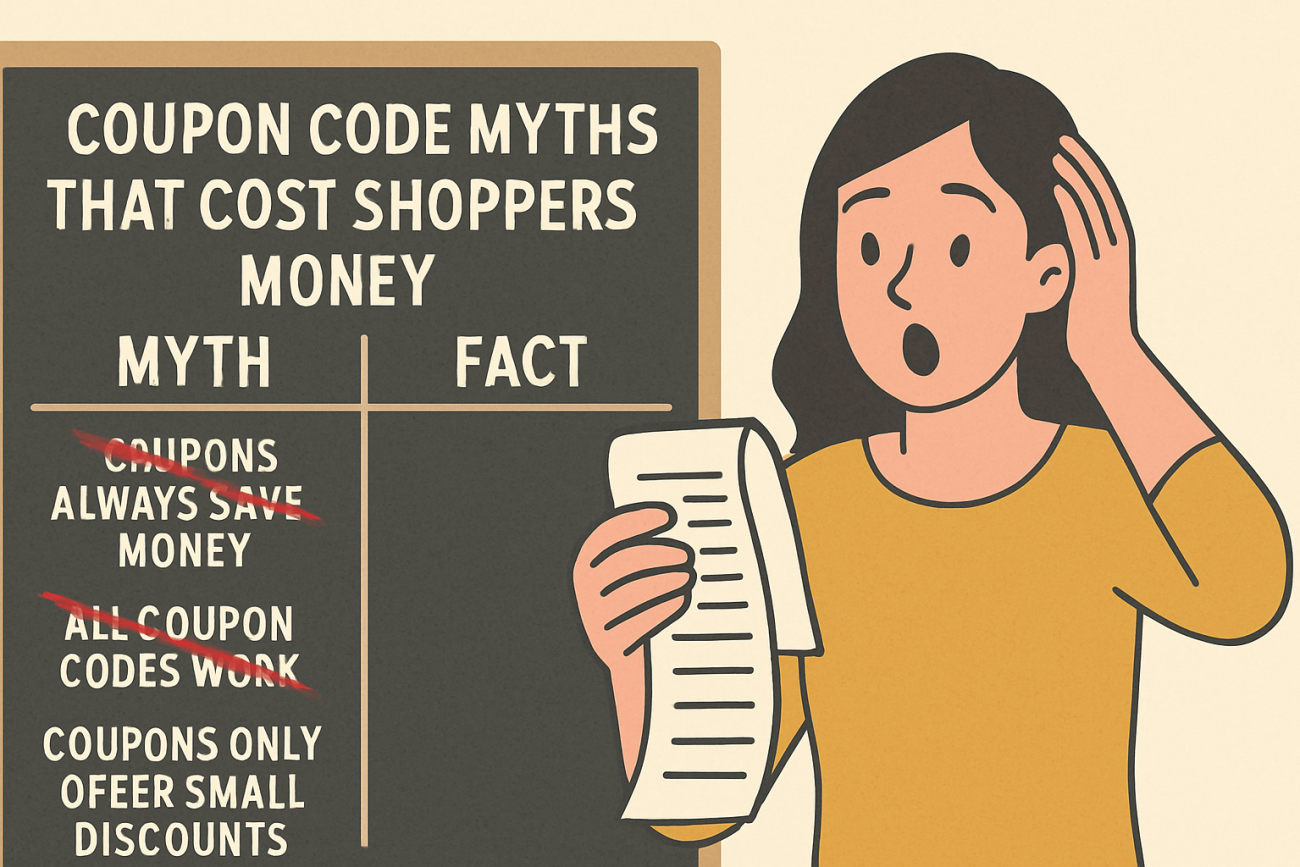
In the pursuit of online savings, coupon codes have become a ubiquitous tool for shoppers worldwide. The promise of instant discounts is alluring, transforming a routine purchase into a triumphant bargain. Yet, beneath the surface of seemingly endless deals lies a landscape riddled with misconceptions and outright myths. These myths, often perpetuated by outdated information or malicious actors, can not only lead to frustration but can also cost shoppers valuable time, expose their personal data, and ultimately, drain their wallets.
This comprehensive guide aims to debunk the most prevalent coupon code myths that are costing shoppers money in 2026. We’ll cut through the hype, expose the hidden agendas behind misleading claims, and provide you with a clear, realistic understanding of how modern couponing truly works. By arming yourself with accurate information and practical strategies, you can navigate the digital discount world with confidence, avoid common pitfalls, and ensure your pursuit of savings is both safe and genuinely rewarding.
Who This Is For / Not For
- This guide is for: Beginners and intermediate online shoppers who are eager to save money but are tired of encountering expired or fake coupon codes. It’s for individuals who want to understand the underlying mechanics of online discounts, protect their privacy, and adopt smarter, more effective saving habits. If you value transparency and realistic advice over exaggerated claims, this guide is for you.
- This guide is not for: Individuals seeking
quick-rich schemes, those who are comfortable with sharing extensive personal data for minimal discounts, or individuals who prefer to blindly trust any coupon source without verification. While we aim for accuracy, the dynamic nature of online promotions means vigilance is always required.
The “100% Working” Myth: Why Your Search is Failing
One of the most pervasive myths in online couponing is the idea that every search for a discount code will yield a “100% working” result. This belief often leads shoppers down a rabbit hole of frustration, trying countless expired or invalid codes from generic coupon aggregation sites.
The SEO Trap: Why Sites Keep Expired Codes Active
Many coupon websites, particularly those that rely heavily on advertising revenue, have a vested interest in appearing to have a vast database of codes. They often keep expired or non-functional codes listed on their pages for one primary reason: Search Engine Optimization (SEO). These “zombie codes” attract search engine traffic, even if they provide no actual value to the user. The more codes a site lists, the higher it might rank in search results, leading to more clicks and ad impressions, regardless of the codes’ efficacy [1]. This practice directly contributes to shopper frustration and wasted time.
The “Hit Rate” Reality: Why Most Public Codes are Actually “Zombies”
In 2026, the reality is that the “hit rate” for finding a working code on a generic coupon site is often very low. Retailers have become sophisticated in managing their promotions, frequently issuing codes that are:
- Time-sensitive: Valid for only a few hours or days.
- Single-use: Designed for one customer only.
- Region-locked: Applicable only in specific countries.
- New customer only: Reserved for first-time buyers.
- Product-specific: Only work for certain items or categories.
When these highly specific codes are aggregated without proper filtering or real-time verification, they quickly become “zombies” – codes that appear active but are, in fact, dead. The sheer volume of these non-working codes makes manual searching an inefficient and often fruitless endeavor [2].
Transparency Note: Your time has value. Spending 15-20 minutes trying dozens of non-working codes for a potential $5 discount is often a net loss. Prioritize methods that offer a higher success rate, even if they require a different approach.
Myth 1: “Free” Coupon Sites are Always Safe
The promise of free savings can sometimes blind shoppers to potential risks. While many coupon sites are legitimate, a significant number are not, and interacting with them can have serious consequences for your privacy and security.
The Data Harvesting Reality: How Fake Coupons Steal Your Info
Scammers frequently use fake coupons as bait to harvest personal data [3]. These malicious sites might:
- Request excessive personal information: Asking for your full name, address, phone number, or even payment details just to “unlock” a coupon.
- Install malware: Prompting you to download a file or extension that contains malicious software.
- Phishing attempts: Directing you to fake login pages that mimic legitimate retailers to steal your credentials.
Because fake coupons are easy to create and spread rapidly through social sharing, they are a common vector for data theft and fraud. Consumers in the United States reported losing $12.5 billion to fraud in 2024, with fake offers being a significant contributor [3].
Red Flags: What to Watch Out For
To protect yourself, be vigilant for these common red flags that often indicate a fake or malicious coupon offer [3]:
- “Share to Unlock” Requirements: If a coupon demands you share it on social media or tag friends to access the discount, it’s a classic viral spread tactic used by scammers.
- Shortened or Weird Links: Be suspicious of
bit.lylinks, misspelled domain names, or URLs that don’t match the official retailer’s website. - No Fine Print: Legitimate coupons always have clear terms, including expiration dates, exclusions, and usage limits. A lack of this information is a major warning sign.
- Pressure Tactics: Phrases like “Only 10 minutes left!” or “Limited quantity!” are designed to rush you into making a mistake.
- Payment or Survey Requirements: Never pay money or complete a lengthy survey just to “unlock” a coupon. This is a common tactic for data harvesting.
Actionable Tip: When in doubt, always start with verified platforms like Groupon Coupons or the official retailer’s website. These sources actively verify offers and provide clear terms, significantly reducing your risk.
Myth 2: You Can Always Stack Multiple Codes
The idea of combining several coupon codes for a massive discount is a tempting fantasy for many shoppers. However, the reality is that coupon stacking is the exception, not the rule, and believing otherwise can lead to missed opportunities or frustration.
The “One and Done” Rule: Why Most Retailers Block Stacking
Most online retailers have strict policies that allow only one coupon code per order. This is a fundamental rule designed to protect their profit margins and prevent excessive discounting. Their checkout systems are typically configured to apply only the single best discount, even if you enter multiple codes. Attempting to stack codes where it’s not allowed will simply result in an error message or only one of the codes being applied [4].
The Exceptions: Brands That Actually Allow It
While rare, some retailers do permit a limited form of coupon stacking. These are typically specific types of discounts, such as:
- Store-specific rewards: Like Kohl’s Cash or CVS ExtraBucks, which can often be combined with a percentage-off coupon.
- Manufacturer coupons with store coupons: In grocery stores, you might be able to use one manufacturer coupon alongside one store-issued coupon for the same item.
- Free shipping codes with percentage-off codes: Occasionally, a retailer might allow a free shipping code to be combined with a product discount.
These exceptions are usually clearly stated in the retailer’s promotional terms. For example, CVS is known for its more flexible stacking policies, allowing savvy shoppers to combine various rewards and coupons for significant savings [5].
Table: Common Retailer Stacking Policies
| Retailer Type | Typical Stacking Policy | Notes |
|---|---|---|
| Most Online Retailers | One coupon code per order | System applies the best single discount |
| Grocery Stores | Manufacturer + Store coupon | Can often combine one of each type |
| Department Stores (e.g., Kohl’s, Macy’s) | Store rewards (e.g., Kohl’s Cash) + %-off coupon | Check specific terms for each promotion |
| Fast Fashion (e.g., H&M, Zara) | One coupon code per order | Focus on loyalty programs for best deals |
Myth 3: Extensions Always Find the Best Deal
Browser extensions like PayPal Honey or Capital One Shopping have revolutionized online savings by automating the coupon search process. They are incredibly useful, but believing they always find the absolute best deal is a myth that can cost you money.
The Affiliate Model: How Extensions Prioritize Deals
These extensions primarily operate on an affiliate model. They partner with retailers and earn a commission when a user makes a purchase using a code or deal they provided. This means their algorithms are often optimized to present deals that benefit both the shopper and their own business. While they strive to find the best savings for you, they might not always have access to every single type of discount available [6].
What They Miss: Influencer Codes and Community-Shared “Leaks”
Browser extensions are excellent at finding publicly available, widely distributed coupon codes. However, they often miss:
- Influencer-specific codes: Discounts shared by social media personalities that are part of a direct partnership and not indexed by general coupon databases.
- Community-shared “leaks”: Codes that are briefly shared in niche forums, Discord servers, or Telegram groups before they become widely known or expire.
- Personalized offers: Discounts sent directly to your email based on your browsing history or abandoned carts.
These “hidden” codes can sometimes offer deeper discounts than what an extension might find. For example, a Reddit megathread might feature a 25% off code for a specific brand, while an extension only finds a 10% off code [7].
Actionable Tip: Combine the convenience of extensions with a targeted manual search. Let your extension run first. If you’re not satisfied with the discount, then consider checking niche communities or social media for potentially deeper, less public codes.
Myth 4: “Never Expires” and “Unlimited Use” are Legit
Encountering a coupon code advertised as “never expires” or offering “unlimited use” can feel like hitting the jackpot. However, this is almost always a myth, and such claims are often red flags for scams or misleading information.
The Scammer’s Playbook: Why Real Coupons Always Have Limits
Legitimate coupon codes are a marketing tool designed to drive specific behaviors (e.g., first-time purchases, clearing old inventory, promoting a new product). As such, they almost always come with clear limitations [3]:
- Expiration Dates: To create urgency and manage promotional budgets.
- Usage Limits: To prevent abuse and control the total discount given.
- Minimum Purchase Requirements: To ensure a certain transaction value.
- Exclusions: To protect profit margins on high-demand or premium items.
Any claim of a “never expires” or “unlimited use” code for a significant discount should be treated with extreme skepticism. These are common tactics used by scam sites to lure unsuspecting shoppers into clicking malicious links or providing personal information [3].
The Fine Print: Why Exclusions (Apple, Nike) Are the Norm
Another common misconception is that a sitewide coupon code will apply to everything. In reality, most retailers have a list of excluded brands or product categories. High-value, high-demand items from brands like Apple, Nike, or certain luxury goods are almost always excluded from general percentage-off promotions. This is a standard business practice to maintain brand value and profit margins. Failing to check the fine print for these exclusions can lead to disappointment at checkout [1].
Real-World Constraints: The Hidden Costs of Couponing
While the goal of couponing is to save money, certain myths and practices can introduce hidden costs that erode your overall savings. Understanding these constraints is crucial for truly effective and safe coupon hunting.
Privacy Trade-offs: The Cost of “Free” Extensions
As discussed, many browser extensions and “free” coupon apps collect data on your browsing and shopping habits. This data can be used for targeted advertising or sold to third parties. While the convenience is undeniable, it’s important to weigh the value of the discount against the privacy you’re giving up. For some, this trade-off is acceptable; for others, it’s a hidden cost they’re unwilling to pay [2].
The Time Sink: When Hunting for a $2 Code Costs You $20 in Time
Time is money. Spending an hour manually searching for a $2 coupon code, or trying dozens of expired codes, represents a significant opportunity cost. This is a common pitfall for shoppers who fall for the “100% working” myth. Focus your efforts on strategies that offer a higher return on your time investment, such as using reliable extensions or targeted community searches for higher-value items.
Regional Variability: Why That “Hidden” Code Fails in Your Country
Many coupon codes, especially those shared in niche online communities or by influencers, are highly region-specific. A code found in a US-based forum might not work for a shopper in Europe, and vice-versa. This regional variability is a real-world constraint that can lead to frustration if not understood. Always consider the origin of a code and its likely applicability to your location [1].
Community Perspectives: Real Stories from the Checkout
Disclaimer: The following are summaries of community experiences from various online forums and do not reflect the views of the author. They are included to provide a broader perspective on the effectiveness and challenges of coupon codes.
The “Data Leak” Scare: A Reddit user recounted a harrowing experience: “I signed up for a ‘free coupon’ site that asked for way too much info. A few weeks later, I started getting targeted phishing emails and even a few suspicious calls. Never again. Now I only use official sites or trusted extensions.” This highlights the very real risks of unverified coupon sources [3].
The “Stacking” Frustration: A shopper on a deal forum expressed their annoyance: “I had a 20% off code and a free shipping code, but the website wouldn’t let me use both. It’s so frustrating when you think you’re getting a great deal, only to find out you can only use one.” This common experience underscores the prevalence of the “one code per order” rule [4].
The “Zombie Code” Time-Waster: Another user lamented, “I spent an hour on RetailMeNot trying every single code for a new TV. Not one worked. It was all expired junk. I wish those sites would just remove the dead codes.” This sentiment is widely shared among shoppers tired of misleading coupon aggregators [1].
Actionable Guidance: Your Myth-Busting Checklist
To navigate the world of coupon codes safely and effectively, adopt this myth-busting checklist:
- Be Skeptical of “100% Working” Claims: Assume that most codes on generic aggregation sites will be expired or invalid. Prioritize verified sources.
- Verify Coupon Sources: Stick to official retailer websites, reputable browser extensions (like PayPal Honey or Capital One Shopping), and trusted community forums (like specific subreddits).
- Check the Fine Print: Always look for expiration dates, minimum purchase requirements, and brand/product exclusions. If there’s no fine print, be wary.
- Understand Stacking Rules: Assume “one code per order” unless explicitly stated otherwise by the retailer. Don’t waste time trying to stack codes that won’t work.
- Prioritize Privacy: Use secondary email addresses for newsletter sign-ups. Be cautious about sharing personal information with unverified coupon sites or referral links from strangers.
- Value Your Time: Calculate the potential savings versus the time spent hunting for a code. Automated tools are often more efficient for smaller discounts.
- Recognize Red Flags: Be aware of “share to unlock” tactics, suspicious links, pressure sales, and requests for payment to access a coupon. These are almost always scams.
- Report Scams: If you encounter a fake coupon or scam site, report it to the FTC (ReportFraud.ftc.gov) and the relevant social media platform.
Conclusion: Shop with Caution and Confidence
The world of coupon codes is filled with both genuine opportunities for savings and pervasive myths that can lead to frustration and financial loss. By understanding the realities of modern couponing, debunking common misconceptions, and adopting a cautious yet confident approach, you can transform your online shopping experience.
Don’t let the allure of a massive discount blind you to potential risks. Equip yourself with knowledge, leverage trusted tools, and always prioritize your privacy and security. The goal isn’t just to find a coupon code; it’s to find a working coupon code safely and efficiently, ensuring that your pursuit of savings truly benefits your wallet. Shop smarter, avoid the myths, and enjoy the satisfaction of being a truly savvy consumer.
References
- Why is the internet full of so many invalid coupon codes? – Reddit r/explainlikeimfive
- Common Reasons Why Your Promo Code Isn’t Working – ColorMango
- How to Spot Fake Coupons and Avoid Scams in 2026 – Groupon Blog
- Couponing Pitfalls & Ethics: Why Codes Fail, Fine-Print Traps … – OffersCarnival
- CVS Coupon Stacking Rules 2026: Beginner to Advanced – X (formerly Twitter) @glitchalerts
- The Best Chrome Coupon Extensions in 2025 – Reddit r/SavingMoney
- MEGATHREAD – CASH/CODES/COUPONS – January 2026 – Reddit r/FrugalFemaleFashion