Last Reviewed on: January 6, 2026
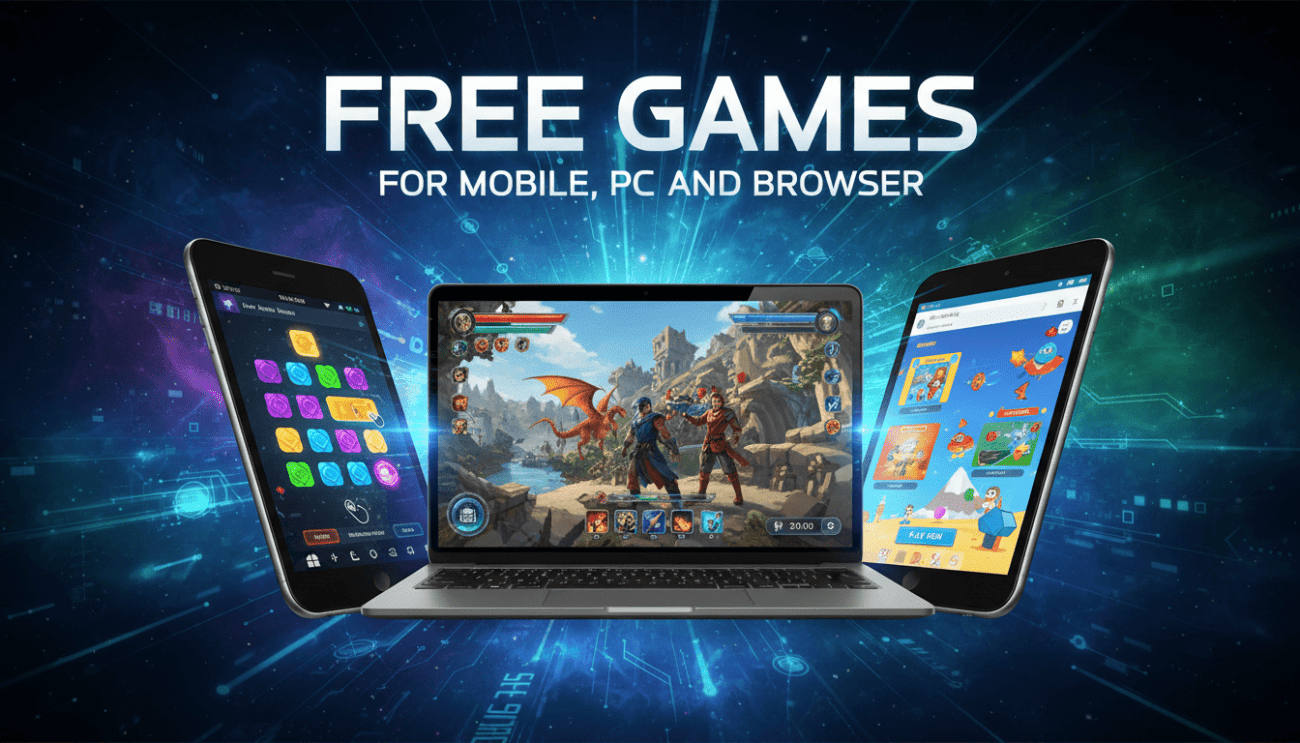
The promise of free games has fundamentally reshaped the video game industry. What was once a niche category is now the dominant model across mobile, PC, and browser platforms. Millions of players worldwide enjoy high-quality, engaging experiences without ever spending a dollar upfront. But as with any compelling offer, the word “free” is a powerful marketing tool that often obscures a more complex economic reality.
If you are not paying with money, you are paying with something else: your time, your attention, or your data. Understanding this trade-off is the key to becoming a savvy consumer in the world of free-to-play (F2P) gaming.
This article will break down the current landscape of free games across all major platforms, explain the sophisticated business models that fund them, and provide actionable guidance on how to enjoy these experiences without falling prey to hidden costs or predatory mechanics.
Who This Is For / Not For
This guide is designed for beginners and early intermediate gamers who are new to the F2P model or who want to understand the mechanics behind the games they already play. If you are looking for high-quality entertainment without a high price tag, and you want to do so transparently, this is for you.
This article is not for advanced game developers, those seeking “pay-to-win” strategies, or individuals who believe all F2P games are inherently predatory. We avoid hype and focus on the clear, realistic, and educational reality of the F2P economy.
The Three Pillars of Free Gaming
The modern free game landscape is defined by three distinct platforms, each with its own strengths, monetization methods, and hidden costs.
1. PC Gaming: The Quality Powerhouse
The PC platform, driven by digital storefronts like Steam, the Epic Games Store, and dedicated launchers, offers some of the most robust and high-fidelity F2P experiences available.
| Platform | Free Game Strategy | Examples of Top F2P Titles |
|---|---|---|
| Steam | Massive F2P library, often supported by cosmetic purchases. | Dota 2, Destiny 2, Warframe, Path of Exile |
| Epic Games Store | Weekly free game giveaways (full, premium titles) to drive platform adoption. | Fortnite, Rocket League, Genshin Impact |
| Dedicated Launchers | Games with their own ecosystems and communities. | League of Legends, Valorant |
The Hidden Cost: While the initial download is free, the cost often manifests as time investment and cosmetic pressure. Games like Dota 2 and League of Legends require hundreds of hours to master, and while they are not “pay-to-win,” they rely heavily on selling cosmetic items (skins, emotes) to players who are deeply invested in the game’s community and culture. The cost is not in money, but in the psychological pressure to conform or express identity through digital goods.
2. Mobile Gaming: The Convenience King
Mobile gaming, primarily on iOS and Android devices, is the largest segment of the F2P market. These games are designed for short, frequent play sessions and rely on highly sophisticated monetization models.
The Hidden Cost: The primary hidden cost in mobile F2P is the monetization model itself, which often includes in-app purchases (IAPs) and gacha mechanics. IAPs can be used to skip wait times, gain an advantage, or unlock content. The gacha model, exemplified by games like Genshin Impact and Honkai: Star Rail, involves randomized rewards (like characters or weapons) that encourage repeated spending, a system that has drawn criticism for its similarity to gambling [3].
3. Browser Gaming: The Instant Access Champion
Browser games require no download and are instantly accessible, making them ideal for casual players or those with low-spec hardware.
The Hidden Cost: Browser games are often heavily reliant on ad revenue and pay-to-progress mechanics. While titles like Forge of Empires or RuneScape offer a complete experience, the free version often includes frequent, disruptive advertisements or imposes long wait times for in-game actions. The cost here is your attention and patience. You are trading the convenience of instant access for a fragmented, ad-supported experience.
The True Currency: Your Data and Attention
The most significant hidden cost across all F2P platforms is the exchange of your personal information for entertainment. When a game is “free,” you are not the customer; you are the product being sold to advertisers.
The Data Trade-Off
Game developers and their advertising partners collect vast amounts of data to fund the F2P model [4]. This data is not just used to show you relevant ads; it is used to optimize the game itself to maximize your engagement and spending potential.
| Data Collected | Purpose | Hidden Trade-Off |
|---|---|---|
| Device Identifiers | Cross-app tracking for targeted advertising. | Loss of privacy across your entire mobile/PC usage. |
| Behavioral Analytics | Tracking session length, spending triggers, and “churn points.” | The game is actively designed to manipulate your behavior and keep you playing/spending. |
| Inferred Data | Predictions about your spending habits or likelihood to quit. | You are being profiled and categorized for marketing purposes. |
As one study noted, the industry’s ability to profile players is comparable to that of social media platforms, turning your gameplay into a source of highly valuable information [5]. The convenience of a free game is often subsidized by the value of your consumer data, a trade-off that is rarely made explicit in the initial download.
The Rise of Dark Patterns
The pressure to monetize has led some developers to employ dark patterns—user interface tricks designed to nudge players toward spending or sharing data [4]. These can include:
- Forced Consent: Making the “Accept All” button for data sharing much easier to click than the “Customize Privacy” option.
- Artificial Scarcity: Creating limited-time offers or daily login bonuses that pressure players to log in frequently or make impulse purchases.
- Misleading Pricing: Using confusing in-game currencies (e.g., Gems, Crystals, Gold) to obscure the real-world cost of an item.
Expertise, Experience, and Trustworthiness: What the Community Says
To provide a complete picture, we must look beyond the business models and examine the real-world experiences of the gaming community. This section summarizes discussions from various online forums and platforms, offering a ground-level view of the F2P experience.
Disclosure: The author of this article did not participate in the following discussions. This is a summary of community experiences to provide a broader, more trustworthy perspective.
The Pay-to-Win vs. Pay-for-Convenience Divide
The community often distinguishes between two types of F2P games: those that are pay-to-win (P2W) and those that are pay-for-convenience (P4C).
“I’ve played Warframe for years. It’s the gold standard for F2P. You can grind for literally everything, but if you want to skip the 72-hour build time on a new item, you pay. That’s P4C. P2W is when you can only get the best gear by spending money, and that’s where I draw the line.” — PC Gamer, Reddit Forum
This sentiment highlights a crucial point: players are generally accepting of models that monetize time (P4C), but they quickly lose trust in games that monetize power (P2W). Games like Path of Exile are frequently praised for their ethical monetization, focusing almost entirely on cosmetic items that do not affect gameplay.
The Value of Free Giveaways
The community highly values platforms that offer genuinely free, full-price games, such as the weekly giveaways on the Epic Games Store.
“I’ve claimed over 200 games from Epic since 2022. Most of them I’ll never play, but getting a AAA title like Control or Borderlands 3 for literally zero dollars is an amazing deal. It’s a great way to build a library without any hidden cost, other than having to install their launcher.” — Gamer, Online Forum
These giveaways are a clear example of a platform using a loss leader strategy to gain market share, but for the consumer, the value is undeniable and transparent.
Actionable Guidance for the Savvy Gamer
Navigating the F2P landscape requires a realistic mindset and a few key strategies. Here is how you can maximize your enjoyment while minimizing the hidden costs:
- Understand the Monetization Model: Before investing significant time, research how the game makes money.
- P4C (Pay-for-Convenience): Generally acceptable. You pay to save time.
- P2W (Pay-to-Win): Avoid if you value fair competition. You pay for power.
- Gacha: Treat it like a lottery. Never spend more than you can afford to lose, and be aware of the psychological triggers.
- Protect Your Data: Assume all free games are collecting data. Review the privacy policy and use the “Customize Privacy” options to limit data sharing, especially for targeted advertising. On mobile, restrict permissions like location access unless absolutely necessary for gameplay.
- Use Free Giveaways Strategically: Regularly check platforms like the Epic Games Store and Steam for full-price games being offered for free. This is the closest you will get to a truly “free” game.
- Set a Budget (Even for Free Games): If you decide to engage with IAPs, set a strict monthly budget. Remember that the game is designed to make you feel like you need the purchase.
- Prioritize Transparency: Support developers who are open about their monetization. Games that clearly separate cosmetic purchases from gameplay mechanics tend to be more trustworthy and provide a better long-term experience.
Conclusion: The Value of the Trade-Off
The question, “Are free games really free?” has a clear answer: No, they are not.
The cost of developing, maintaining, and updating a modern video game is substantial. This cost is always covered—either through in-app purchases, advertising revenue, or the collection and sale of your data.
The real value of this knowledge is not to avoid F2P games entirely, but to understand the nature of the trade-off you are making. By recognizing that you are paying with your time, attention, or data, you can make informed choices, protect your privacy, and enjoy the vast, high-quality world of free gaming with complete transparency.
References
[1] Shampanier, K., Mazar, N., & Ariely, D. (2007). The psychology of free: How a price of zero influences decision making. Marketing Science, 26(6), 742-757.
[2] Usercentrics. (2025). The hidden cost of free games: Your personal data. [URL: https://usercentrics.com/magazine/articles/hidden-cost-of-free-games/]
[3] Reddit. (2024). The hidden costs of free-to-play games: How gaming companies are lowering consumer standards across the board. [URL: https://www.reddit.com/r/Overwatch/comments/y9yjte/the_hidden_costs_of_freetoplay_games_how_gaming/]
[4] Meegle. (2025). Game Monetization For Free-To-Play Games. [URL: https://www.meegle.com/en_us/topics/game-monetization/game-monetization-for-free-to-play-games]
[5] Kröger, Raschke, Percy Campbell, and Ullrich. (2025). Surveilling the gamers: Privacy impacts of the video game industry. [Source: Usercentrics, as cited in [2]]
[6] Steam. [URL: https://store.steampowered.com]
[7] Epic Games Store. [URL: https://store.epicgames.com]
[8] iOS. [URL: https://www.apple.com/ios]
[9] Android. [URL: https://www.android.com]
Deep Dive: Platform-Specific Nuances
To further understand the F2P landscape, we must examine the specific nuances of each platform. The experience of playing a free game on a high-end PC is fundamentally different from playing one on a smartphone or in a web browser, and these differences extend to how they are monetized.
The PC Ecosystem: High Stakes and High Rewards
On PC, the F2P model is often used to build massive, long-term communities. Games like Counter-Strike 2 or Dota 2 are not just games; they are platforms with their own economies.
The “Skin” Economy: Many PC F2P games monetize through purely cosmetic items. These “skins” do not provide any gameplay advantage, but they are highly sought after for their rarity and aesthetic appeal. In some cases, these items can be traded on third-party marketplaces, creating a real-world value for digital goods. While this model is often praised for being “fair,” it can lead to significant spending by players who feel the need to customize their characters or express their status within the community.
The Battle Pass Model: Popularized by Fortnite, the Battle Pass is a seasonal subscription that rewards players for playing the game. While there is usually a free tier, the premium tier offers significantly more rewards. This model is designed to maximize retention—the more you play, the more value you get from your purchase. For the consumer, the trade-off is a significant time commitment to “unlock” the value they have already paid for.
The Mobile Ecosystem: The Science of Engagement
Mobile F2P games are often built using sophisticated psychological principles to maximize player engagement and spending.
Energy Systems and Wait Times: Many mobile games use an “energy” system that limits how much you can play in a single session. Once your energy is depleted, you must either wait for it to recharge or pay to refill it. This is a classic example of monetizing impatience. By creating artificial barriers to play, developers encourage players to make small, frequent purchases to continue their progress.
The “Whale” Phenomenon: In the mobile gaming industry, a small percentage of players, known as “whales,” contribute the vast majority of the game’s revenue. These players may spend thousands of dollars on IAPs or gacha pulls. This dynamic often leads developers to prioritize the experience of high-spending players over the broader community, which can result in “pay-to-win” mechanics that alienate casual, non-spending players.
The Browser Ecosystem: Accessibility vs. Quality
Browser games occupy a unique space, offering instant access but often at the cost of depth and technical fidelity.
The Role of Flash and HTML5: Historically, browser games relied on Adobe Flash, but the transition to HTML5 has allowed for more complex and visually impressive experiences. However, because these games must run within a web browser, they are limited by the browser’s performance and security constraints.
Monetization through Cross-Promotion: Many browser games are used as marketing tools for larger, premium titles. A developer might release a free, simplified browser version of their game to build interest and drive sales for the full version on PC or console. In this case, the “free” game is a form of interactive advertising.
Trust and Transparency: Navigating the “Free” Label
The most important tool for any gamer is a critical eye. When a game is labeled as “free,” it is essential to ask: How is this being funded?
The Importance of Community Reviews
Before downloading a new F2P game, look for community reviews on platforms like Reddit or dedicated gaming sites. Players are often the first to identify predatory monetization or “pay-to-win” mechanics. A game with a high rating but numerous complaints about its store or gacha system is a red flag.
The Role of Regulatory Oversight
In recent years, governments around the world have begun to take a closer look at F2P monetization, particularly gacha mechanics and loot boxes. Some countries, like Belgium and the Netherlands, have classified certain types of loot boxes as gambling and have restricted their use in games. This increasing oversight is a positive step toward greater transparency and consumer protection in the gaming industry.
Final Thoughts: Becoming a Savvy Gamer
The world of free gaming is vast, diverse, and full of high-quality experiences. From the competitive arenas of League of Legends to the casual puzzles of mobile games, there is something for everyone.
However, the “free” label should always be viewed as an invitation to a trade-off. By understanding the business models, protecting your data, and being mindful of the psychological triggers used to encourage spending, you can enjoy the best that F2P gaming has to offer without compromising your financial well-being or your privacy.
The most successful F2P games are those that build a relationship of trust with their players. As a consumer, your most powerful tool is your choice. Support the developers who are transparent, fair, and respectful of your time and data, and you will find that the world of free gaming is more rewarding than ever.