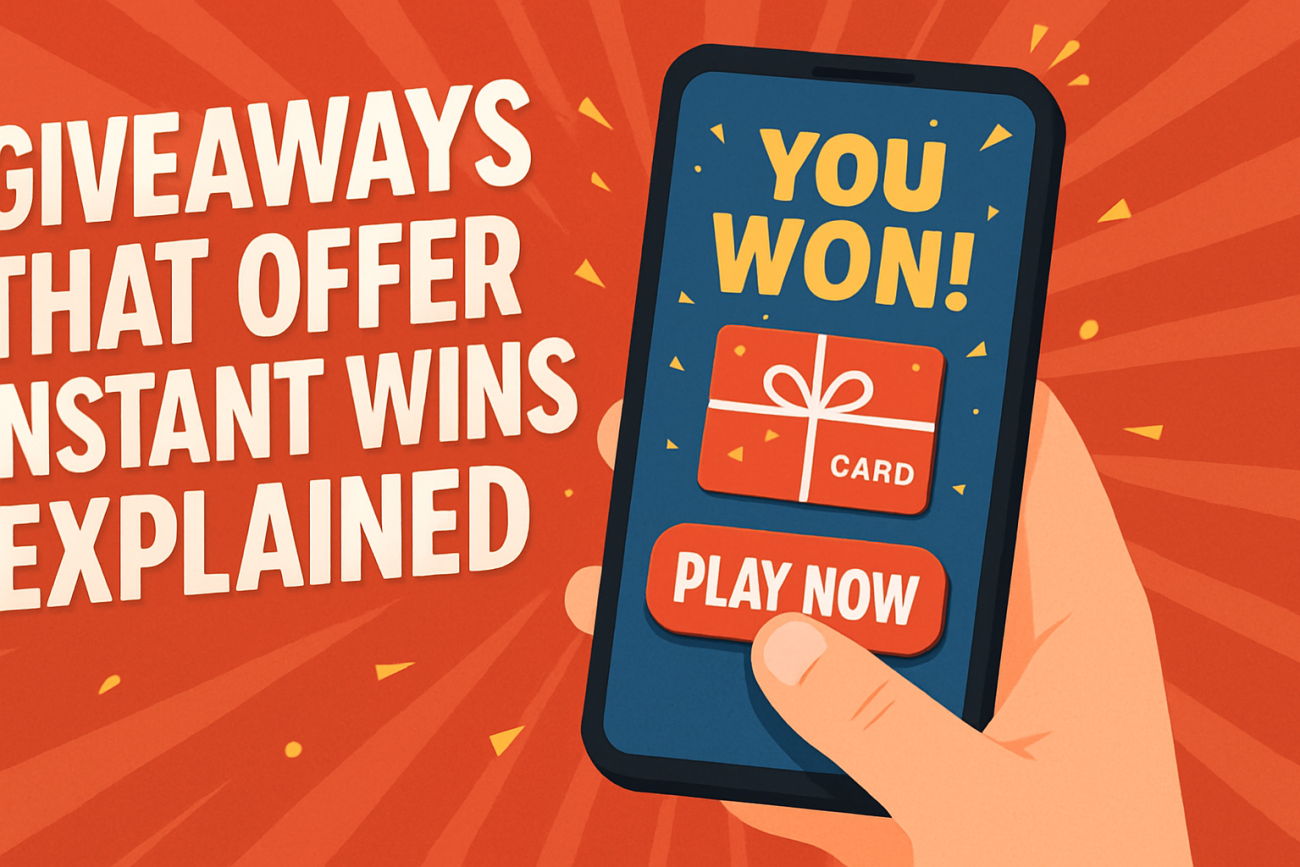
The appeal of an instant win is primal: immediate gratification, the thrill of surprise, and the chance to get something valuable for free. Unlike traditional sweepstakes, where you enter and wait weeks or months for a drawing, instant-win giveaways tell you right away if you’ve won a prize. This immediate feedback loop makes them highly addictive and incredibly popular with both consumers and the companies that run them.
For beginners and early intermediates looking to explore the world of free stuff, instant-win games can be a fun and low-effort entry point. However, to participate effectively and safely, you must understand the mechanics, the real-world constraints, and the legal framework that governs these promotions.
How Instant Wins Actually Work
The term “instant win” is a marketing mechanism, not a description of pure chance. Behind the digital scratch card or the spinning wheel is a carefully calculated algorithm designed to ensure the company gives away exactly the number of prizes it budgeted for, no more and no less.
There are two primary mechanics used to determine an instant win:
1. The Winning Moments Model
This is the most common and easiest-to-understand model. The promotion administrator pre-schedules specific, random moments in time during the promotion period.
- Example: A company decides to give away 100 prizes over 30 days. They use a computer program to randomly select 100 specific seconds (e.g., 10:15:32 AM on Day 5, 4:45:01 PM on Day 12, etc.).
- The Rule: The first person to enter the giveaway at or immediately after one of these pre-scheduled “winning moments” is the winner of that prize.
- The Trade-Off: This means you don’t need to be the only person entering; you just need to be the first person to enter after a winning moment. If no one enters during a winning moment, the prize usually rolls over to the next scheduled moment, increasing the odds for that next entry.
2. The Randomized Probability Model
In this model, every single entry has a fixed, predetermined chance of winning.
- Example: A company decides to give away 10,000 prizes and expects 10 million entries. They set the odds at 1 in 1,000.
- The Rule: When you enter, the system immediately runs a random number generator. If your entry number falls within the winning range (e.g., if your number is divisible by 1,000), you win instantly.
- The Trade-Off: This model is less common for large-scale promotions because it’s harder for the company to control the exact number of prizes given away. If fewer people enter than expected, they might not give away all the prizes. If more people enter, they might exceed their budget.
In both cases, the “instant” part is the immediate notification you receive on your screen, which is the key to driving high engagement.
Popular Formats You’ll Encounter
The delivery method for instant-win games is constantly evolving, but they all tap into the same psychological desire for surprise and immediate reward.
| Format | Description | Psychological Appeal |
|---|---|---|
| Spin-to-Win Wheels | A virtual wheel divided into segments (prizes, discounts, or “try again”). | Visual suspense, the feeling of “almost winning,” and the classic carnival game thrill. |
| Digital Scratch Cards | Users “scratch off” a digital overlay to reveal the result underneath. | Nostalgia for lottery tickets, physical interaction, and a clear, immediate reveal. |
| Tap & Win | A simple button or screen tap reveals the result instantly. Often used on mobile devices. | Convenience, speed, and low barrier to entry, perfect for social media campaigns. |
| Reveal Boxes/Slots | Users click on a box or pull a lever on a virtual slot machine. | Gamification, the excitement of “unwrapping” a gift, and the familiar mechanics of casino games. |
These formats are often created using specialized marketing platforms like RafflePress, ShortStack, or ViralSweep, which handle the complex coding and legal compliance for the sponsoring company.
Where to Find Legitimate Instant Wins
The internet is flooded with instant-win opportunities, but separating the legitimate promotions from the scams requires a discerning eye.
1. Brand Websites and Apps
The most reliable source is often the brand itself. Large companies like Coca-Cola, Starbucks, or major retailers frequently run instant-win promotions directly on their websites or through their mobile apps to drive traffic and collect customer data. Look for promotions tied to product purchases or seasonal campaigns.
2. Sweepstakes Aggregators
These websites act as a centralized directory, listing hundreds of active giveaways. They are excellent resources for finding new opportunities quickly.
- Sweepstakes Bible: A popular aggregator that lists various types of contests, including instant wins, often categorized by prize type and entry frequency.
- PrizeGrab: A consumer-facing site that runs its own daily and weekly instant-win games, often for cash, gift cards, or electronics.
3. Social Media
Platforms like Instagram and Facebook are common hosts for instant-win contests, often requiring a simple “like, share, and tag” entry. Be cautious here, as these are also breeding grounds for fake accounts and scams. Always verify that the account running the contest is the official, verified brand page.
The Legal Side: Staying Safe and Compliant
In the United States, Canada, and most developed nations, promotions that offer prizes based on chance are heavily regulated to protect consumers. Understanding these rules is crucial for both safety and setting realistic expectations.
The Golden Rule: No Purchase Necessary (NPN)
In the US, a promotion is considered an illegal lottery if it contains three elements: Prize, Chance, and Consideration (payment or purchase). To avoid being an illegal lottery, all legitimate sweepstakes and instant-win games must eliminate the element of Consideration.
This means that if a company requires you to buy a product to enter, they must also provide a free, alternative method of entry (AMOE), such as mailing in a postcard or filling out an online form without a purchase. If a promotion requires a purchase with no free entry option, it is likely illegal and should be avoided.
The Official Rules
Every legitimate instant-win promotion must have a set of Official Rules. These rules are the legal contract between you and the sponsor. While they are often dense and full of legal jargon, they contain the critical information you need:
- Eligibility: Who can enter (age, location).
- Prize Details: The exact number of prizes, their retail value, and how they will be awarded.
- Odds of Winning: The mathematical probability of winning a prize.
- Sponsor Information: The legal entity responsible for the promotion.
The Canadian Quirk: Skill-Testing Questions
In Canada, to legally differentiate a sweepstakes from a game of pure chance (which is illegal gambling), winners are often required to correctly answer a time-limited, multi-step mathematical question before they can claim their prize. If you enter a Canadian-based instant win, be prepared for this final “skill test.”
Tax Implications: When Winning Isn’t Free
The biggest financial trade-off of winning a large prize is the tax burden.
- Prizes are Taxable Income: In the US, the fair market value of any prize you win is considered taxable income. This includes cash, cars, trips, and electronics.
- Reporting Threshold: If the value of your prize is $600 or more, the sponsor is legally required to send you and the IRS a Form 1099-MISC (or W-2G for certain gambling winnings).
- The “Tax Bill” Constraint: If you win a car worth $30,000, you will receive a tax bill based on that value. If you don’t have the cash to pay the taxes, you may be forced to sell the prize, which means the “free” prize came with a significant, mandatory cost.
Real-World Trade-offs: The “Cost” of Participation
While instant-win games are free to enter, they require you to pay with your time, attention, and personal data.
Data as Currency
The primary goal for most companies running instant-win promotions is not just to give away prizes, but to acquire customer data. When you enter, you are typically required to provide your name, email address, and sometimes your phone number or zip code.
- The Trade-Off: You are trading your personal information for a small chance to win. This data is then used for marketing, email newsletters, and targeted advertising.
- Actionable Tip: Create a dedicated “sweepstakes email” address that you use only for entering contests. This keeps your primary inbox clean and allows you to manage the inevitable influx of marketing emails.
The Odds Reality
While the “instant” nature is exciting, the odds of winning a grand prize are often astronomical. A promotion with a single $10,000 prize might receive 5 million entries.
- The Trade-Off: The prizes you are most likely to win are the small, high-volume prizes, such as discount codes, $5 gift cards, or free product samples. These are still valuable, but they require a shift in expectation from winning a car to winning a coupon.
Scam Detection: Red Flags
Be vigilant against scams that mimic legitimate instant-win promotions.
| Red Flag | Legitimate Promotion |
|---|---|
| Asks for Money | Never asks for a fee, tax, or “shipping and handling” charge to claim a prize. |
| Asks for Credit Card/Bank Info | Will only ask for personal information for tax purposes after you have been verified as a winner. |
| Unprofessional Communication | Uses poor grammar, generic email addresses (e.g., Gmail), or demands secrecy. |
| Requires Immediate Action | Gives you a reasonable amount of time (e.g., 72 hours) to respond and verify your win. |
Conclusion: Play for Fun, Not for a Living
Instant-win giveaways are a fantastic source of entertainment and a legitimate way to win small, valuable prizes. They provide a rush of instant gratification that traditional sweepstakes cannot match.
However, the key to enjoying them is to maintain a clear, realistic perspective. Understand that you are trading your data for a chance, that the odds of a life-changing win are slim, and that a large prize comes with a mandatory tax bill.
By creating a dedicated entry strategy, reading the Official Rules, and staying vigilant against scams, you can safely and effectively participate in the world of instant-win giveaways. Play for the fun of the entry, and consider any prize—no matter how small—a bonus.
References
[1] Breaktime Media. The Complete Guide to Running an Instant Win Promotion. https://breaktimemedia.com/insights/instant-win-promotion
[2] IRS. Is the prize or award I received taxable?. https://www.irs.gov/help/ita/is-the-prize-or-award-i-received-taxable