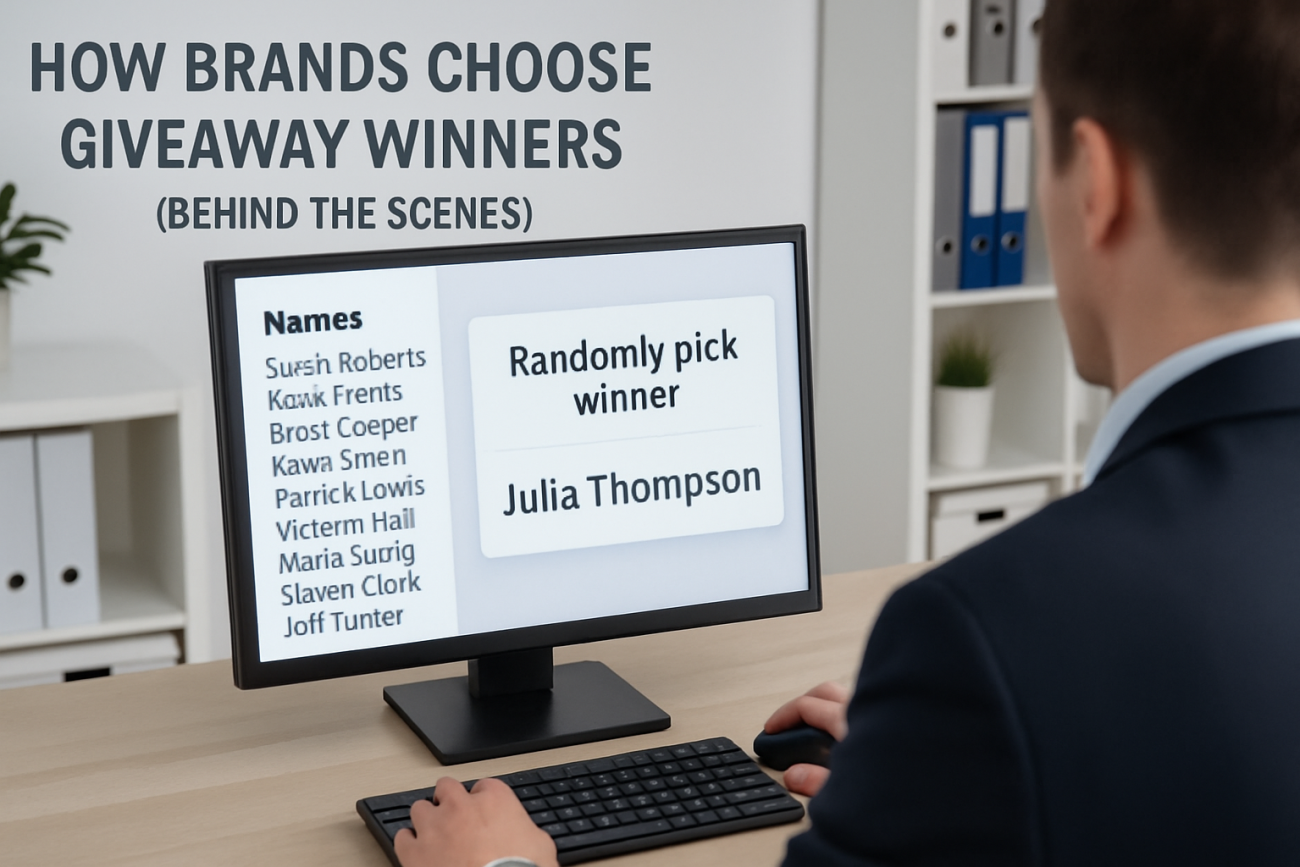
For anyone who regularly enters online giveaways, the process of selecting a winner can feel like a complete mystery. You enter your email, follow a few social media accounts, and then wait, often wondering if a real person even sees your entry. It can feel like a black box, leading to the common, cynical thought: “Nobody ever actually wins these things.”
The reality, however, is far more transparent and systematic than most people realize. Brands run giveaways not out of charity, but as a highly effective marketing strategy. To protect their reputation and comply with strict legal regulations, they must adhere to a rigorous, auditable process for selecting winners. Understanding this behind-the-scenes process—the tools, the rules, and the common pitfalls—is the key to becoming a more effective and successful entrant.
The Legal Divide: Sweepstakes vs. Contests
Before a brand can even think about picking a winner, they must first define the type of promotion they are running. Legally, there are two main categories, and the choice dictates the entire winner selection process.
1. Sweepstakes (Game of Chance)
A sweepstakes is a promotion where the winner is selected purely by chance. This is the most common type of giveaway you encounter online.
- Selection Method: Random draw. Every eligible entry has an equal chance of winning.
- Legal Requirement: To avoid being classified as an illegal lottery, a sweepstakes must adhere to the No Purchase Necessary (NPN) rule. This means the brand cannot require you to buy a product, pay a fee, or provide any form of “consideration” to enter. If a purchase is an option, a free alternative entry method must also be provided.
2. Contests (Game of Skill)
A contest is a promotion where the winner is selected based on skill or merit. Examples include photo competitions, essay writing, or submitting a recipe.
- Selection Method: Manual judging based on clearly defined criteria (e.g., creativity, originality, technical skill).
- Legal Requirement: Because the winner is chosen based on skill, the NPN rule is less strict. However, the judging criteria must be objective and clearly outlined in the Official Rules to prevent accusations of bias.
The vast majority of “enter-to-win” giveaways on social media are legally structured as sweepstakes, meaning the winner must be chosen randomly.
The Tools of the Trade: How Winners are Picked
For sweepstakes, brands rely on specialized software platforms to manage the massive volume of entries and ensure a fair, auditable selection process. These tools act as the digital equivalent of putting names in a hat, but with sophisticated fraud detection and verification features.
Automated Platforms
Brands rarely use simple spreadsheets to manage thousands of entries. Instead, they use professional giveaway platforms that integrate directly with social media and email services. Popular examples include Gleam.io, RafflePress, SweepWidget, and Woobox.
These platforms perform three critical functions:
- Entry Collection and Validation: They track every action taken by the entrant (e.g., following a Twitter account, visiting a YouTube channel, submitting an email).
- Random Number Generation (RNG): At the end of the promotion, the brand uses the platform’s built-in tool to generate a random number. This number corresponds to a specific entry in the database. This process is auditable, meaning the platform can prove that the selection was truly random and unbiased.
- Fraud Detection: The software actively flags suspicious entries, such as multiple entries from the same IP address, disposable email addresses, or entries from known bot networks.
The Verification Step
Once the random number generator selects a potential winner, the brand does not immediately announce them. This is where the “Winner Pending” phase begins, and it is the most common reason for a delay in the final announcement.
The brand must manually verify that the randomly selected entrant actually completed all the required steps and is eligible to win.
| Action Required | Verification Check | Common Disqualification Reason |
|---|---|---|
| Follow on Instagram | Brand checks the winner’s profile to confirm the follow is active. | The entrant unfollowed the account immediately after entering. |
| Tag a Friend | Brand checks the comment to ensure a real, active friend was tagged. | The entrant tagged a fake account or a celebrity account. |
| Be a US Resident | Brand verifies the winner’s address and IP location. | The entrant used a VPN or is outside the allowed geographic region. |
| Be 18 Years Old | Brand verifies the winner’s age via a legal document (if prize is high-value). | The entrant is a minor or provided a false birth date. |
If the initial winner fails the verification check (e.g., they didn’t actually follow the account or are outside the eligible area), they are disqualified, and the brand moves on to the next randomly selected alternate winner. This process can repeat several times, which is why a winner announcement might be delayed by days or even weeks.
The Human Element: Manual Judging
For contests based on skill, the winner selection process shifts from an algorithm to a human panel. This is often used when the brand wants high-quality user-generated content (UGC).
- The Judging Panel: The panel typically consists of marketing staff, creative directors, or sometimes external, independent judges.
- The Criteria: The Official Rules must clearly state the judging criteria, often broken down into weighted categories, such as:
- Creativity (40%)
- Relevance to Brand Message (30%)
- Technical Quality (30%)
While this process is more subjective, it is still auditable. The brand must keep detailed scorecards for every entry, proving that the winner was chosen based on the published criteria and not on personal preference or bias.
Why You Might Be Disqualified (Without Knowing It)
Many entrants are disqualified not because the brand is trying to cheat them, but because they failed to meet a specific, non-negotiable rule. Understanding these common disqualification reasons can significantly improve your chances of winning.
1. Fraud and Bot Activity
Giveaway platforms are constantly fighting against automated entries and bot networks. If the software detects suspicious activity—such as multiple entries from the same IP address, using disposable email services, or entering hundreds of giveaways in a short period—your entry will be flagged and removed. Brands are extremely strict on this to maintain the integrity of the promotion.
2. The Geographic Trap
Many giveaways are restricted to specific regions (e.g., “US Only,” “UK Residents,” or “Continental North America”). This is usually due to complex international laws regarding sweepstakes registration, bonding, and tax reporting. If you enter a US-only contest from Canada, your entry will be disqualified during the verification phase.
3. Failure to Respond
When a brand contacts a potential winner, they typically send an email with a strict deadline (often 48 to 72 hours) to respond and claim the prize. If the winner fails to reply by the deadline, they are disqualified, and the brand moves on to an alternate winner. This is why using a dedicated, monitored email address is crucial.
4. Incomplete or Incorrect Actions
If the entry method required you to “Follow and Tag 3 Friends,” the brand will check that you did both. If you only followed the account, your entry is invalid. The software may have recorded the entry, but the manual verification process will catch the error.
The Cost of “Free”: Why Brands Run Giveaways
From the brand’s perspective, running a giveaway is a significant investment, not a simple handout. The costs involved explain why they are so meticulous about the winner selection process.
| Cost Category | Description | Trade-Off for the Brand |
|---|---|---|
| Legal Compliance | Drafting Official Rules, state registration fees, bonding (for high-value prizes), and hiring legal counsel. | High upfront cost, but necessary to avoid massive fines and lawsuits. |
| Software & Tools | Monthly fees for platforms like Gleam.io or SweepWidget to manage entries and detect fraud. | Ongoing operational cost, but ensures fairness and data integrity. |
| Prize Fulfillment | The actual cost of the prize, plus shipping, handling, and insurance. | Direct financial cost, but the prize is the incentive that drives marketing goals. |
| Third-Party Administration | Hiring an external agency to handle the entire process, including winner selection and tax reporting. | Highest cost, but provides guaranteed neutrality and legal protection. |
The primary return on this investment is data acquisition (your email address) and social proof (new followers, shares, and engagement). Your entry is the currency that pays for the giveaway.
Actionable Tips for Effective Entrants
Understanding the behind-the-scenes process allows you to optimize your entry strategy:
- Read the Official Rules: Always check the eligibility requirements (age, location) and the entry method details. This prevents wasted time on entries you cannot win.
- Use a Dedicated Email: Create a separate email address solely for sweepstakes entries. This protects your primary inbox from spam and ensures you don’t miss a critical “You’ve Won!” notification.
- Be Honest and Complete: Do exactly what the entry method requires. Do not try to cheat the system with bots or fake accounts; the software is designed to catch this, and it will lead to immediate disqualification.
- Focus on Contests (Skill): If you are creative, focus your efforts on contests where the winner is chosen by judging. While the effort is higher, the number of entrants is often much lower, dramatically increasing your odds of winning.
In the end, the process of choosing a giveaway winner is a carefully orchestrated, legally compliant procedure. It is a numbers game, but by understanding the rules of the game, you can ensure your entry is always eligible, auditable, and ready to be selected when the random number generator finally lands on your name.
References
[1] KickoffLabs. Running a legal a contest, giveaway, or sweepstakes in the USA. https://kickofflabs.com/blog/usa-giveaway-sweepstakes-laws
[2] Gleam.io. Run Contests, Giveaways & Grow Your Business With Gleam. https://gleam.io/