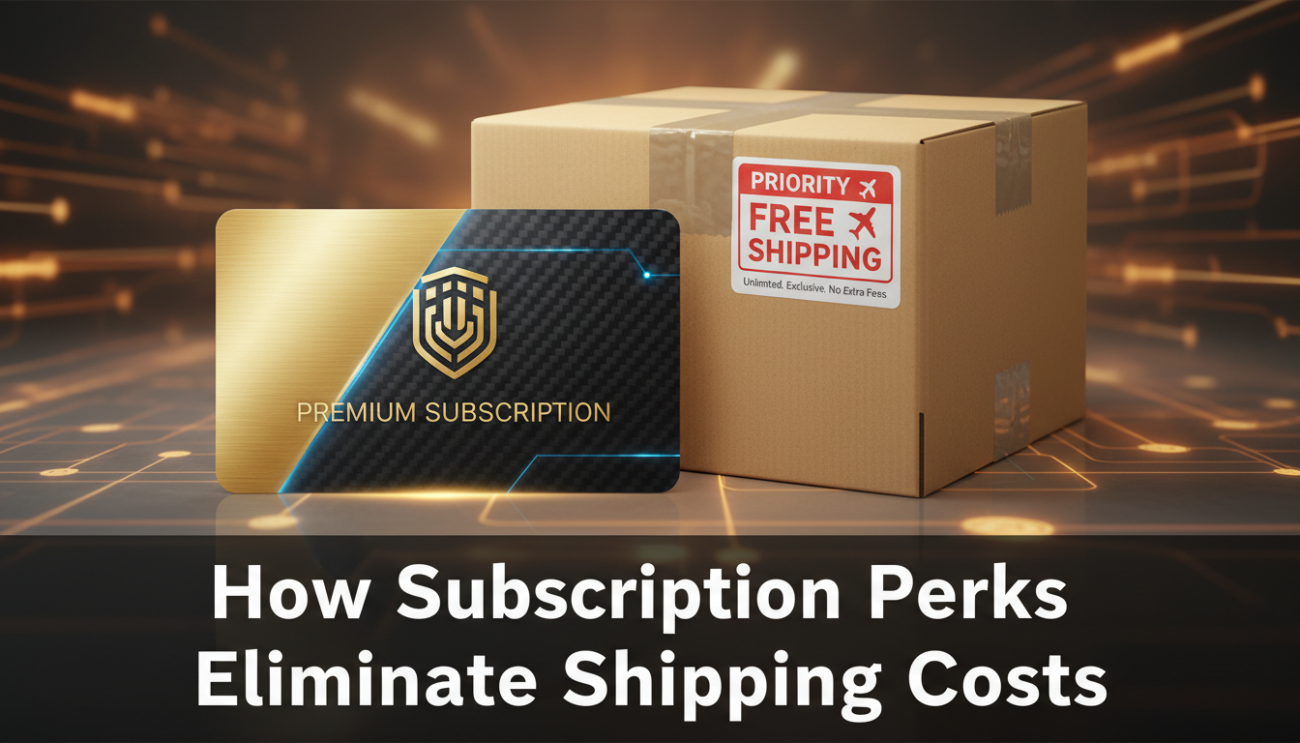
In the early days of e-commerce, shipping was a variable cost that shoppers calculated for every individual order. Today, that model has been largely replaced by the “subscription economy.” For a flat annual or monthly fee, consumers can “activate” a permanent state of free shipping across major retailers. However, as we move into 2026, the landscape has become more crowded and complex. With Amazon, Walmart, and Target all vying for your loyalty, the question is no longer just “how to get free shipping,” but “which subscription actually pays for itself?”
This article provides a practical, realistic breakdown of how subscription perks eliminate shipping costs, the hidden trade-offs involved, and how to determine if these memberships are a financial win or a subtle drain on your budget.
1. The Big Three: A 2026 Comparison
The core of the subscription shipping market is dominated by three giants. Each offers a slightly different version of “free,” and understanding these nuances is the first step for any beginner.
| Subscription | Annual Cost | Primary Shipping Perk | Key “Hidden” Catch |
|---|---|---|---|
| Amazon Prime | $139 | Free 2-day shipping on millions of items. | Highest annual fee; grocery delivery often requires a $100 minimum. |
| Walmart+ | $98 | Free shipping with no order minimum on eligible items. | Same-day delivery from stores still requires a $35 minimum. |
| Target Circle 360 | $99 | Unlimited same-day delivery via Shipt on orders over $35. | No free trial; standard shipping is better handled by their store card. |
Amazon Prime: The Ecosystem Play
Amazon Prime remains the gold standard for variety. Its primary shipping perk is the removal of the $35 minimum spend for non-members. For a beginner, this means you can order a single $5 tube of toothpaste and have it delivered in two days without a shipping fee.
The Trade-off: At $139 per year, you need to save at least $11.50 in shipping fees every month just to break even. If you only shop on Amazon once or twice a month, you are likely overpaying for the privilege of “free” shipping. Furthermore, Amazon has increasingly moved toward “Prime-exclusive” items, meaning some products are simply unavailable to non-subscribers, regardless of their willingness to pay for shipping.
Walmart+: The Grocery Specialist
Walmart+ is the most direct competitor to Prime. Its standout feature is that it offers free shipping with no order minimum on items shipped by Walmart.com, similar to Prime. However, its real strength lies in local delivery. If you do your weekly grocery shopping at Walmart, the $0 delivery fee on orders over $35 can save you hundreds of dollars in service fees over a year.
The Trade-off: Unlike Amazon, Walmart’s third-party marketplace is less integrated. You may still encounter shipping fees for items sold by independent sellers on the Walmart platform. Additionally, the “free” delivery from stores is contingent on driver availability in your specific area, which can be a constraint in rural regions.
Target Circle 360: The Same-Day Contender
Target’s newest entry, Circle 360, focuses heavily on speed. By leveraging the Shipt marketplace, it offers same-day delivery from your local Target.
The Trade-off: For standard shipping (3-5 days), Target already offers a “hidden” free option: the Target Circle Card. If you have the card, you get free shipping on most items without the $99 annual fee. This makes Circle 360 a niche product for those who specifically value same-day speed over standard delivery.
2. Niche Subscriptions: Beyond the Big Three
For intermediate shoppers, the real savings often come from specialized memberships that cater to specific hobbies or needs.
- My Best Buy Plus: For $49.99 a year, tech enthusiasts get free 2-day shipping on all orders. If you frequently buy components, games, or small electronics, this lower entry price can be more efficient than a Prime membership.
- GameStop Pro: At $25 a year, this is one of the cheapest memberships. While it has a shipping threshold (usually around $54), the monthly $5 rewards essentially pay for the membership itself, making the shipping perks a “free” secondary benefit.
- Instacart+: If you prefer shopping across multiple local stores (Costco, CVS, Kroger), Instacart+ eliminates the delivery fee on orders over $35.
- Chewy Autoship: While not a traditional “paid” subscription, their Autoship program activates a permanent 5% discount and free shipping on orders over $49. For pet owners, this is a “set it and forget it” way to eliminate shipping costs.
Real-World Constraint: These niche subscriptions often come with “service fees” that are separate from shipping. Even with a $0 delivery fee, you might still pay a 5% service fee and a tip for the driver. Beginners often overlook these costs when calculating their total savings.
3. The “Break-Even” Math: Is it Worth It?
To determine if a subscription is a practical choice, you must perform a simple “Break-Even Analysis.” This is the most important step for any beginner to avoid wasting money on a service they don’t use.
The Calculation Formula:
- Identify the Annual Cost: (e.g., $139 for Amazon Prime).
- Estimate Average Shipping Cost: Most retailers charge between $6.99 and $9.99 for standard shipping. For our math, let’s use a conservative $7.
- Calculate the Magic Number: Divide the annual cost by the average shipping fee.
- For Amazon Prime: $139 / $7 = ~20 orders per year.
- For Walmart+: $98 / $7 = ~14 orders per year.
- For Target Circle 360: $99 / $7 = ~14 orders per year.
Beyond the Shipping Fee:
However, the math isn’t always that simple. You must also consider the “Value of Time.” If a subscription like Target Circle 360 saves you a 45-minute trip to the store once a week, that is 39 hours of your life saved per year. For many, that time is worth far more than the $99 annual fee.
The Practical Rule: If you place fewer than 15 orders a year and do not value the “time-saving” aspect of same-day delivery, you are better off paying the individual shipping fees or using the “filler item” strategy to hit the $35 free shipping threshold. Don’t let the marketing of “unlimited free shipping” blind you to the fact that you are pre-paying for a service you might not use.
4. The “Subscription Trap” and How to Avoid It
Retailers love subscriptions because they create “sunk cost fallacy.” Once you pay for Prime, you feel obligated to shop at Amazon to “get your money’s worth,” even if a competitor like eBay or a local shop has a lower price. This psychological lock-in is the real reason these programs are so profitable for companies.
Strategies for the Realistic Shopper:
- The “One-Month” Sprint: Instead of an annual membership, pay for a single month ($12-$15) during a high-volume period like the holidays or a home renovation. Complete all your shopping and then cancel. This is particularly effective for Walmart+ during the back-to-school season.
- The Trial Rotation: Most services offer a 30-day free trial. If you have a large purchase coming up, activate the trial, get the free shipping, and set a calendar reminder to cancel on day 28. You can often “reset” these trials after 12 months of inactivity.
- Family Sharing: Amazon allows you to share Prime benefits with one other adult in your “Household.” This effectively cuts the cost in half if you split the bill with a roommate or partner. Walmart+ has historically been more restrictive with sharing, so factor that into your cost-benefit analysis.
- Credit Card Credits: Many premium credit cards (like those from American Express or Chase) offer monthly credits that cover the cost of Walmart+ or Instacart+. If you already pay for one of these cards, your shipping subscription might be “free” already.
5. Fashion and Beauty: The “Free Shipping” Membership Shift
In 2026, we are seeing a significant shift in how fashion and beauty retailers handle shipping. Instead of a flat fee, many have moved to “Shipping Passes” or loyalty-based subscriptions.
- ASOS Premier: For a small annual fee (usually around $19), you get unlimited next-day shipping with no minimum spend. For frequent fashion shoppers, this is one of the highest-value subscriptions on the market.
- Sephora Flash: Historically, Sephora offered a “Flash” shipping subscription for $15/year. In 2026, this has largely been integrated into their free “Beauty Insider” program for higher tiers, but the concept of a low-cost shipping pass remains a powerful tool for beauty enthusiasts.
- Rent the Runway: Their subscription models include all shipping and dry cleaning costs. For those who attend multiple events a year, the elimination of these logistics costs is a major part of the value proposition.
6. Hidden Costs: Tips, Fees, and Markups
A common misconception is that a subscription makes the delivery “free.” In the world of same-day delivery (Walmart+, Target Circle 360, Instacart+), there are three hidden costs that remain, and they can easily double the “cost” of your order if you aren’t careful.
1. The Tip: The Unspoken Requirement
Delivery drivers for these services are often gig workers using their own vehicles and fuel. A standard $5-$10 tip (or 10-15% of the order) is expected and necessary for ethical shopping. If you order groceries once a week, that’s an extra $260-$520 a year in tips. These are not covered by your subscription and should be factored into your “per-order” cost.
2. The Service Fee: The “Hidden” Surcharge
Even with $0 delivery, platforms often charge a “service fee” (usually 1-5% of the order total) to cover their operational costs, insurance, and platform maintenance. This fee is often “hidden” in the final checkout screen, appearing only after you’ve spent 20 minutes picking out your items. For a $100 grocery order, a 5% service fee is $5—nearly the cost of a standard shipping fee you were trying to avoid.
3. Price Markups: The Convenience Tax
Some items on delivery apps are priced higher than they are in the physical store. This is especially common with Instacart+ and Shipt. You might be paying $0 for shipping but $0.50 more for every gallon of milk or $1.00 more for a box of cereal. Over a full cart of groceries, these markups can add $10-$20 to your bill.
The Realistic Take: If you are using a subscription to save money, you must compare the “delivered price” to the “in-store price.” Often, the subscription only eliminates the visible shipping fee, while the invisible costs remain. For the most frugal beginners, the “Ship to Store” or “In-Store Pickup” options mentioned in our previous guides remain the only way to get a truly $0 delivery experience.
7. Stacking Perks for Maximum Efficiency
The most advanced way to eliminate shipping costs is to “stack” a subscription with other tools.
- Subscription + Store Card: Using a Walmart+ membership alongside a Walmart credit card can give you 5% back on your orders, which often covers the cost of the membership itself.
- Subscription + Cash Back: Use portals like Rakuten or Honey when shopping through your subscription account. The cash back earned on your “free shipping” orders can eventually pay for the next year’s membership fee.
- Educational Discounts: Always check if your subscription has a student or teacher version. Amazon Prime Student is 50% off the standard price and includes all the same shipping perks.
8. The Future of Shipping Subscriptions: 2026 and Beyond
As we look toward the end of 2026, the trend is moving toward “Hyper-Local” subscriptions. Retailers are using AI to predict what you need and offering “Predictive Shipping” subscriptions where items arrive before you even realize you’re out. While this sounds convenient, it also increases the “lock-in” effect, making it harder for consumers to price-shop.
Real-World Constraint: The more automated your shipping becomes, the less control you have over the cost. Always maintain a manual “audit” of your subscriptions once a quarter to ensure you are still getting value.
Summary: The Beginner’s Roadmap
If you are just starting to look at subscription perks, follow this realistic path:
- Start with the Free Trials: Do not commit to an annual fee until you have tested the service for 30 days.
- Audit Your History: Look at your bank statements from the last six months. How many times did you pay for shipping? If the total is less than $100, you don’t need a major subscription yet.
- Choose Based on Your “Anchor” Need: If you need groceries, go with Walmart+. If you need a wide variety of household goods, go with Amazon Prime. If you want same-day speed from a specific store, look at Target Circle 360.
- Watch the “Auto-Renew”: The biggest cost of a subscription is the one you forgot to cancel. Use a virtual card service like Privacy.com to set spending limits on your subscriptions.
Subscriptions are powerful tools for eliminating shipping costs, but they are only “perks” if you use them enough to offset the entry fee. By staying realistic about your shopping habits and mindful of hidden fees, you can ensure that your “free shipping” is actually saving you money.