A Practical Guide to Building Your Home and Life for Free
Last reviewed on: January 8, 2026. Availability of items and platforms may vary by region. This article contains links to external platforms for informational purposes.
In an age of conscious consumption and rising living costs, the allure of acquiring high-quality items for free has never been stronger. From furniture and electronics to clothing and household goods, a surprising abundance of perfectly usable items is regularly given away by individuals and communities. This practice not only saves money but also promotes sustainability, reduces waste, and fosters stronger local connections.
However, navigating the world of local freebies requires a discerning eye, a strategic approach, and an understanding of both the opportunities and the potential pitfalls. This comprehensive guide will equip you with the knowledge and tools to effectively find high-quality free items in your local area, ensuring a rewarding and safe experience.
Who This Is For / Not For
- This guide is for: New homeowners furnishing on a budget, students setting up their first apartment, eco-conscious individuals looking to reduce their environmental footprint, and anyone interested in saving money while acquiring useful items. It’s for those who appreciate the value of second-hand goods and are willing to invest a little time and effort.
- This guide is not for: Individuals seeking brand-new items with warranties, those unwilling to inspect items for quality, or people who are uncomfortable with the logistics of picking up items from strangers. While rewarding, this pursuit requires patience, flexibility, and a commitment to safety.
The Philosophy of Local Gifting: Beyond Just “Free”
The concept of local gifting goes far beyond simply getting something for nothing. It’s deeply rooted in principles of community, sustainability, and resourcefulness. Understanding this philosophy can enhance your experience and help you become a more effective participant.
The Circular Economy in Action
At its heart, local gifting is a vibrant example of the circular economy. Instead of discarding perfectly good items, people choose to pass them on, extending their lifespan and keeping them out of landfills. This is driven by various motivations: decluttering before a move, upgrading to new items, or simply wanting to share with neighbors. Many items given away are not broken or worn out; they are simply no longer needed by their original owners. This creates a continuous cycle of reuse that benefits everyone involved and the planet.
The Trade-off: Time and Effort vs. Financial Cost
While the financial cost of free items is zero, there’s often a trade-off in terms of time and effort. Finding high-quality items requires consistent searching, quick responses, and often arranging for pickup. You might spend time sifting through listings, communicating with givers, and planning transportation. This investment of time and effort is the true “cost” of free items, but for many, the savings and environmental benefits far outweigh it.
Transparency: Real-World Constraints and the “Luck” Factor
It’s important to approach local gifting with realistic expectations. While treasures can be found, it’s not a guaranteed source for every item on your wish list. Real-world constraints include the need for adequate transportation (especially for bulky items), the time required for cleaning or minor repairs, and the inherent “luck” factor of what’s available when you’re looking. Furthermore, regional variability means that the types and quantity of items available can differ significantly between urban, suburban, and rural areas.
Top Platforms for Local Freebies: Your Digital Hunting Grounds
Several platforms have emerged as go-to resources for finding free items locally. Each has its unique strengths, community culture, and best practices for engagement.
| Platform | Focus | Trust Level | Speed of Items | The Catch |
|---|---|---|---|---|
| Buy Nothing Project | Hyper-local gifting | High | Medium | Requires joining a specific neighborhood group |
| Freecycle | Global reuse network | High | Medium | Can be slower to respond, less active in some areas |
| Facebook Marketplace (Free Section) | General marketplace | Medium | Fast | High competition, more scams/bots |
| Nextdoor | Neighborhood social network | High | Medium | Item availability depends on neighborhood activity |
| Craigslist (Free Section) | Classifieds | Low-Medium | Fast | Higher risk of scams, less curated |
The Buy Nothing Project: Community at Its Core
At the forefront of the gifting economy is the Buy Nothing Project. This global movement fosters hyper-local gifting communities, primarily through Facebook groups and a dedicated mobile app. The core principle is simple: give where you live. Members offer items they no longer need, ask for items they desire, and share services, all for free. The emphasis is on building community and reducing waste. These groups often have strict rules against selling or “flipping” items, fostering a high level of trust and genuine sharing. [1]
Freecycle: The Original Reuse Network
Before Buy Nothing, there was Freecycle. Founded in 2003, Freecycle is a global grassroots movement dedicated to keeping reusable items out of landfills. Members post items they want to give away or items they are seeking. While its interface might feel a bit dated compared to social media platforms, Freecycle groups are often well-moderated and attract users genuinely committed to reuse. It might have a smaller reach than Facebook groups in some areas, but the quality of interactions can be very high. [2]
Facebook Marketplace & Nextdoor: Volume and Speed
Facebook Marketplace has a dedicated “Free” section that can be a goldmine for quick finds. Its massive user base means a constant influx of items, from small household goods to large furniture. However, this also means high competition and a greater likelihood of encountering bots or less serious inquiries. Similarly, Nextdoor, a neighborhood-focused social network, often has a vibrant “For Sale & Free” section. Its neighborhood verification process tends to foster a higher level of trust than general marketplaces, making it a good option for finding items from verified neighbors. [3]
The “Skip” List: Scams and Red Flags to Watch Out For
While the spirit of local gifting is generally positive, it’s crucial to be aware of potential scams and deceptive practices. A little vigilance can save you a lot of hassle and keep you safe.
Red Flag 1: Upfront “Hold” or “Shipping” Fees
This is the most common and critical red flag: never pay any money for a free item. If someone asks for a small fee to “hold” an item, cover “shipping” (even if local), or process a “deposit,” it’s a scam. Legitimate givers want to get rid of items, not collect money. Any request for payment, no matter how small, should be an immediate deal-breaker. [4]
Red Flag 2: The “Moving Out” Bot Listings
Be wary of listings that seem too good to be true, especially those claiming to give away multiple high-value items (e.g., a full living room set, electronics) because the giver is “moving out today.” These are often bot accounts designed to gather personal information or lure you into a scam. Look for generic language, poor grammar, and a lack of specific details about the items. If the account seems new or has no other activity, proceed with extreme caution. [5]
Red Flag 3: Unreliable “Curb Alerts”
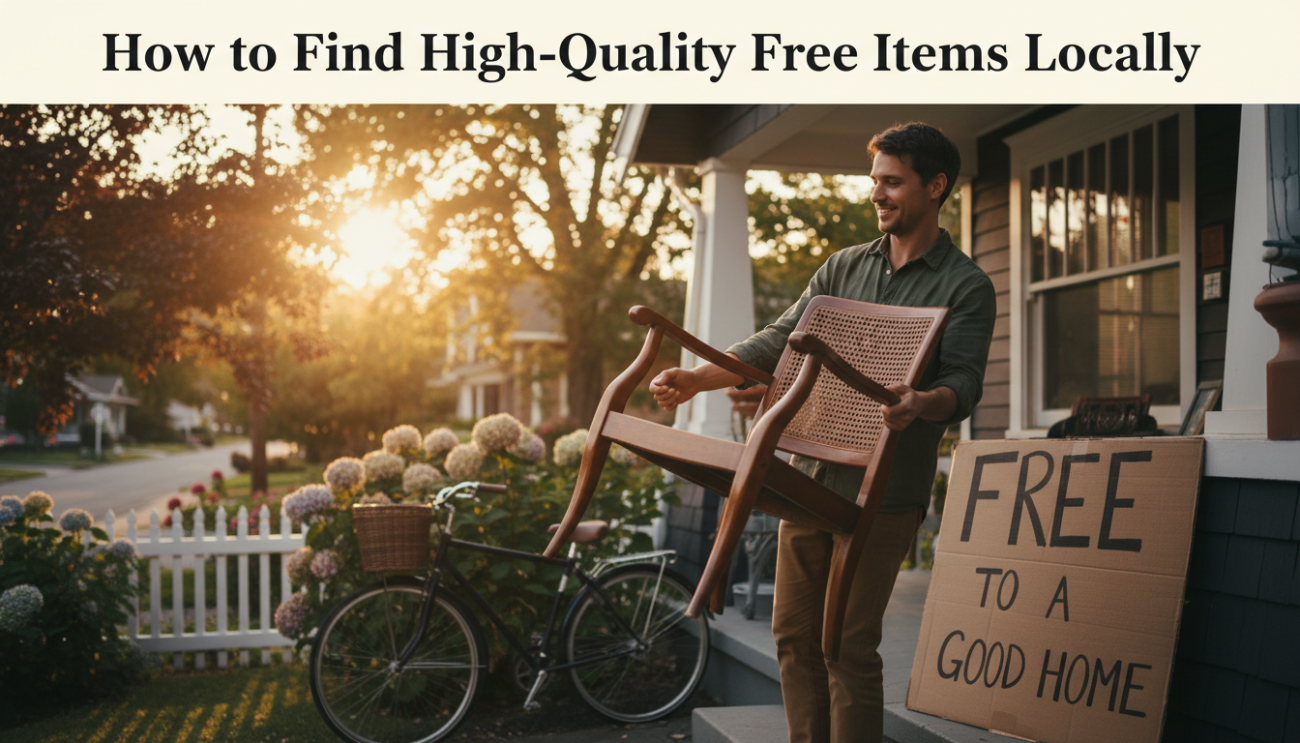
While “curb alerts” (items left on the sidewalk with a “Free” sign) can sometimes yield treasures, they are often a gamble. Driving across town only to find an empty sidewalk or a heavily damaged item can be frustrating. More importantly, items left on the curb, especially upholstered furniture, carry a higher risk of pests like bed bugs or cockroaches. Unless you can inspect the item thoroughly and are prepared for potential pest issues, it’s often best to stick to items offered through direct communication. [6]
Quality Control: Avoiding the “Eww” Factor and Ensuring Safety
Acquiring free items can be incredibly rewarding, but it’s essential to prioritize safety and quality. A few preventative measures can save you from bringing home pests or unsafe goods.
The Bed Bug Check: Inspecting Upholstered Items
Upholstered furniture (couches, mattresses, fabric chairs) is a common vector for bed bugs. While a free couch might seem like a great deal, a bed bug infestation can be costly and traumatic. Always inspect upholstered items thoroughly before bringing them into your home. Look for small, reddish-brown stains (fecal spots), tiny white eggs, or the bugs themselves along seams, zippers, and crevices. If you see any signs, politely decline the item. It’s generally safer to stick to items made of metal, plastic, or solid wood that can be easily cleaned. [6]
The “Vibe Check”: Assessing the Donor and Environment
When picking up items from someone’s home, trust your instincts. If possible, arrange for a porch pickup where the item is left outside. If you must enter a home, consider bringing a friend or family member. A quick “vibe check” of the environment can also be telling: a clean, well-maintained home generally suggests items will be in better condition and less likely to harbor pests. If something feels off, it’s always okay to politely decline and leave. [7]
Actionable Tip: Cleaning and Sanitizing Your Finds
Regardless of the item, assume it needs a good cleaning. For hard surfaces, a thorough wipe-down with disinfectant is usually sufficient. For clothing or textiles, a hot wash and high-heat dry cycle can kill most pests. For wooden items, inspect for woodworm or other damage. A little effort in cleaning can transform a free item into a cherished possession.
Community Perspectives: Real Stories from the Curb
Disclaimer: The following are summaries of community experiences from various online forums and do not reflect the views of the author. They are included to provide a broader perspective on finding free items locally.
The “University Move-out” Jackpot: A student on Reddit shared their strategy of visiting university neighborhoods during graduation week. “It’s like a treasure hunt!” they exclaimed. “Students throw out perfectly good mini-fridges, desks, lamps, and even slightly used textbooks. I furnished my entire apartment for almost nothing.” This highlights a seasonal opportunity for high-quality finds. [8]
The “Porch Pickup” Safety Success: A single individual recounted their positive experiences using porch pickups for items found on Buy Nothing groups. “I always ask if they can leave it on the porch,” they explained. “It’s safer for both parties, and I don’t have to worry about awkward interactions. I’ve gotten some amazing plants and kitchenware this way.” This illustrates a common and effective safety protocol. [7]
The “Buy Nothing” Community Connection: Many users praise the community aspect of Buy Nothing groups. “It’s not just about getting stuff,” one member posted. “It’s about connecting with neighbors. I’ve borrowed tools, shared garden produce, and even found a babysitter through my local group. The free items are just a bonus.” This emphasizes the social capital built through these platforms. [1]
Actionable Guidance: Your Local Freebie Strategy
Becoming a successful local freebie hunter involves more than just knowing where to look; it requires strategy, good communication, and adherence to community etiquette.
Step 1: Optimize Your Search and Response
- Set Up Notifications: Many platforms (like Facebook groups or Nextdoor) allow you to set up notifications for keywords (e.g., “couch,” “desk,” “free”). This ensures you’re among the first to know when a desirable item is posted.
- Be Quick and Polite: Free items, especially high-quality ones, go fast. Respond promptly and politely. A friendly, clear message expressing genuine interest and stating when you can pick up the item often gets preference over a terse “Is this available?”
- Offer Flexibility: If possible, offer to pick up the item quickly or at the giver’s convenience. This makes their life easier and increases your chances of securing the item.
Step 2: Master the Logistics
- Transportation Plan: Before committing to a large item, consider how you’ll transport it. Do you have a suitable vehicle? Can you borrow one? Do you need a friend to help lift? Services like TaskRabbit or local movers can be an option for very large items, but this adds cost.
- Tools and Supplies: Bring appropriate tools (e.g., screwdriver for disassembly), blankets or straps for protection, and cleaning supplies for immediate inspection.
Step 3: Practice Good Gifting Etiquette
- Communicate Clearly: If you can’t make a pickup time, communicate immediately. Don’t leave givers waiting.
- Be Grateful: A simple “thank you” goes a long way. Many givers appreciate knowing their items are going to a good home.
- Consider Giving Back: Once you’ve found success, consider contributing to the circular economy yourself by giving away items you no longer need. This strengthens the community and keeps the cycle going.
Conclusion: The Treasure Hunt Awaits
Finding high-quality free items locally is a rewarding endeavor that combines frugality, environmental consciousness, and community engagement. It’s a modern-day treasure hunt where patience, strategy, and a commitment to safety are your most valuable tools. By leveraging dedicated platforms, understanding the unspoken rules, and exercising caution, you can significantly reduce your expenses, minimize waste, and discover unique pieces that add character to your life.
Embrace the thrill of the find, connect with your neighbors, and contribute to a more sustainable world. The free items are out there, waiting for you to give them a second life.
References
- Buy Nothing Project – Official Website
- Freecycle.org – Official Website
- What other platforms are there besides Facebook for “buy nothing”? – Reddit r/povertyfinance
- Am I a sweepstakes winner? Or am I going to get scammed? – Reddit r/Scams (General scam advice applies)
- “free” items because they are “moving out”, are these scams? – Reddit r/FacebookMarketplace
- How to avoid bed bugs and roaches when picking free furniture – Reddit r/Frugal
- Female looking to pick up items. What are the safety precautions? – Reddit r/FacebookMarketplace
- LPT : Free furniture / stuff – Reddit r/LifeProTips