Last Reviewed on: January 6, 2026
In the digital age, software has become a necessity, not a luxury. From writing documents to editing photos, our daily lives are managed by applications. For years, this meant paying for expensive licenses or committing to recurring subscription fees for major players like Microsoft 365 or Adobe Creative Cloud.
However, a quiet revolution has taken place. Today, a vast ecosystem of high-quality, free digital downloads—primarily driven by the open-source community—offers powerful alternatives that can replace nearly every paid tool on your computer. The challenge is not finding a free tool, but understanding the trade-offs involved and choosing the right one for your needs.
This article will guide you through the process of replacing your paid software subscriptions with free, powerful, and often more privacy-respecting alternatives. We will break down the best options across key categories and provide a transparent look at the real costs and constraints of going “free.”
Who This Is For / Not For
This guide is designed for beginners and early intermediate users who are tired of subscription fees and want to build a powerful, cost-effective digital toolkit. If you are a student, a small business owner, or a creative hobbyist looking to save money without sacrificing functionality, this is for you.
This article is not for enterprise-level users who require specialized features, dedicated 24/7 customer support, or absolute, 100% file format compatibility with proprietary software. We avoid hype and focus on the clear, realistic, and educational reality of the free software ecosystem.
The Economics of “Free” Software: Open Source vs. Freeware
When you download a free tool, it falls into one of two major categories, and understanding the difference is crucial for transparency and trust.
1. Open-Source Software (OSS)
Open-source software is defined by its publicly accessible source code. Anyone can inspect, modify, and enhance the code.
- The Trust Factor: The code’s transparency means that security flaws or malicious features are difficult to hide, fostering a high degree of trust within the community.
- The Funding Model: OSS is typically funded by donations, corporate sponsorship (where a company uses the tool and contributes to its development), or volunteer labor.
2. Freeware (Ad-Supported or Freemium)
Freeware is proprietary software that is offered at no cost. The source code is closed.
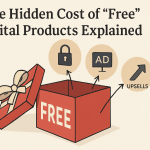
- The Hidden Cost: Freeware is often a loss leader or a freemium model. The “free” version may be limited in features, contain advertisements, or serve as a gateway to a paid, premium version.
- The Trade-Off: While convenient, freeware often comes with a privacy trade-off, as the developer may be collecting user data to fund the product or target ads.
For the most trustworthy and feature-rich alternatives, the open-source community is generally the gold standard.
Category Breakdown: Free Replacements for Paid Giants
You can replace the core functions of the most expensive software suites with free, high-quality downloads.
1. Productivity: Replacing the Office Suite
The biggest drain on many budgets is the subscription to Microsoft 365.
| Paid Tool | Free Alternative | Primary Advantage | Real-World Constraint |
|---|---|---|---|
| Microsoft Word, Excel, PowerPoint | LibreOffice | Complete, installable desktop suite with high compatibility for all major file formats. | Interface can feel dated; complex macros may not translate perfectly. |
| Microsoft Word, Excel, PowerPoint | Google Workspace (Docs, Sheets, Slides) | Excellent real-time collaboration and cloud-based access from any device. | Requires a Google account; trades privacy for convenience (data is used to improve services). |
| Microsoft OneNote | Joplin | Open-source, encrypted, and syncs across devices; superior privacy focus. | Steeper learning curve for advanced features; less intuitive interface than proprietary apps. |
2. Creative Work: Replacing the Adobe Suite
The Adobe Creative Cloud is the industry standard, but its subscription model is prohibitive for many.
| Paid Tool | Free Alternative | Primary Advantage | Real-World Constraint |
|---|---|---|---|
| Adobe Photoshop | GIMP (GNU Image Manipulation Program) | Powerful, professional-grade image editing with extensive features and plugins. | Interface is non-standard and can be confusing for users switching from Photoshop. |
| Adobe Illustrator | Inkscape | The leading open-source vector graphics editor; ideal for logos and scalable designs. | Can struggle with extremely large or complex files compared to Illustrator. |
| Adobe Premiere Pro | DaVinci Resolve (Free Version) | Industry-standard color grading and editing features; no watermark. | Resource-intensive; the free version limits some high-end collaborative features. |
| 3D Modeling/Animation | Blender | Completely free, professional-grade 3D suite used by major studios. | Extremely steep learning curve; requires a powerful computer. |
3. Utilities and System Tools
Even simple utilities can be replaced with free, often superior, alternatives.
- Media Player: Replace proprietary players with VLC Media Player. It is open-source, plays virtually every file format, and is highly trusted by the community.
- Audio Editing: Replace paid audio editors with Audacity. It is a powerful, open-source tool for recording and editing audio files.
- File Compression: Replace WinZip or WinRAR with 7-Zip. It is open-source, fast, and supports a wider range of compression formats.
Trust and Transparency: The Real-World Constraints
Choosing free software is a smart financial decision, but it involves a different set of trade-offs than paying for a subscription. Understanding these constraints is key to a successful transition.
The Learning Curve and Time Cost
The most significant cost of switching to free software is often time. Open-source tools, while powerful, are not always designed with the same polished user experience as their paid counterparts.
“I switched from Photoshop to GIMP, and it took me a month to get comfortable. The tools are all there, but they’re in different places. I saved $50 a month, but I spent 20 hours watching tutorials. It was worth it, but don’t expect it to be a seamless switch.” — Creative Hobbyist, Reddit Forum
This is a common sentiment: you are trading money for time. The initial investment in learning a new interface is the true cost of the “free” download.
Compatibility and Workflow
While compatibility is generally excellent, it is not absolute. If your professional workflow requires you to constantly exchange complex files with colleagues who use proprietary software, you may encounter issues.
- Macros and Scripts: Advanced features like complex Microsoft Excel macros or specialized Adobe Photoshop filters may not function correctly in the free alternatives.
- Proprietary Formats: While tools like LibreOffice can open and save Microsoft files, saving a file in a proprietary format and then reopening it in the original program can sometimes lead to minor formatting errors.
Support and Community
Paid software offers dedicated customer support lines. Free, open-source software offers community support.
- The Trade-Off: Instead of calling a help desk, you rely on searching extensive documentation, community forums, and user-created tutorials. This is a highly effective form of support, but it requires patience and a willingness to troubleshoot.
Privacy: The Critical Distinction
For privacy-conscious users, open-source software is a major win. Because the code is public, there is an inherent transparency that closed-source freeware cannot match.
- Cloud-Based Freeware: Tools like Google Workspace are free, but they are funded by your data. You are trading your privacy for the convenience of cloud collaboration.
- Open-Source Advantage: Tools like Joplin or 7-Zip are designed with privacy as a core feature, often including end-to-end encryption and no data collection.
Actionable Guidance for a Successful Switch
- Identify Your Core Needs: Before switching, list the 3-5 features you use most often in your paid tool. Then, check the feature list of the free alternative. Do not switch based on the promise of a tool; switch based on its proven ability to handle your daily tasks.
- Test with Non-Critical Files: Start by using the free tool for new projects or non-essential files. Do not immediately delete your paid software or convert your entire library.
- Embrace the Community: If you run into a problem, search the official forums or the tool’s documentation first. The solution is almost always already there, provided by a fellow user.
- Consider a Donation: If an open-source tool saves you hundreds of dollars a year, consider making a small donation to the project. This supports the developers and ensures the tool remains free and high-quality for everyone.
Conclusion: The Power of Informed Choice
The era of mandatory, expensive software subscriptions is over for the average user. The free digital download ecosystem, particularly the open-source movement, offers powerful, robust, and ethical alternatives for nearly every task.
The key to success is transparency. By understanding that “free” software requires a trade-off of time and attention, and by choosing open-source options that respect your privacy, you can build a digital life that is both highly functional and financially sustainable. The power to choose your tools—and how they are funded—is now firmly in your hands.
References
[1] The Linux Foundation. What is Open Source? [URL: https://www.linuxfoundation.org/what-is-open-source]
[2] TechRadar. (2025). Best free office software of 2025. (Notes on LibreOffice and OnlyOffice).
[3] XDA Developers. (2025). I replaced my entire Microsoft 365 subscription with free open-source apps. (User testimonial on Joplin, OnlyOffice, and Syncthing).
[4] Reddit. (2024). What are the best open-source alternatives to Microsoft Office and Adobe Creative Cloud? (Community discussion on GIMP, Inkscape, and Kdenlive).
[5] Blackmagic Design. DaVinci Resolve. [URL: https://www.blackmagicdesign.com/products/davinciresolve]
[6] VideoLAN. VLC Media Player. [URL: https://www.videolan.org/vlc/]
[7] Audacity Team. Audacity. [URL: https://www.audacityteam.org]
[8] 7-Zip. 7-Zip. [URL: https://www.7-zip.org]
[9] Blender Foundation. Blender. [URL: https://www.blender.org]
[10] Microsoft. Microsoft 365. [URL: https://www.microsoft.com/en-us/microsoft-365]
[11] Adobe. Adobe Creative Cloud. [URL: https://www.adobe.com/creativecloud.html]
[12] Google. Google Workspace. [URL: https://workspace.google.com]
[13] Google. Google. [URL: https://www.google.com]
[14] WinZip. WinZip. [URL: https://www.winzip.com]
[15] WinRAR. WinRAR. [URL: https://www.win-rar.com]
[16] Microsoft. Microsoft Excel. [URL: https://www.microsoft.com/en-us/microsoft-365/excel]
[17] Adobe. Adobe Photoshop. [URL: https://www.adobe.com/products/photoshop.html]
Deep Dive: The Philosophy and Power of Open Source
To truly appreciate the value of free digital downloads, one must understand the philosophy that drives the open-source movement. It is not just about getting something for nothing; it is about a collaborative approach to technology that prioritizes transparency, community, and freedom.
The “Four Freedoms” of Free Software
The Free Software Foundation (FSF) defines “free software” through four essential freedoms:
- The freedom to run the program for any purpose.
- The freedom to study how the program works and change it so it does your computing as you wish.
- The freedom to redistribute copies so you can help your neighbor.
- The freedom to distribute copies of your modified versions to others.
When you choose an open-source tool like LibreOffice or GIMP, you are supporting an ecosystem that values these freedoms. This is a stark contrast to proprietary software, where you are often restricted by complex End User License Agreements (EULAs) that limit how and where you can use the tools you have paid for.
The Security Advantage of Transparency
A common misconception is that free software is less secure because the code is public. In reality, the opposite is often true. This is known as Linus’s Law: “Given enough eyeballs, all bugs are shallow.”
Because thousands of developers can inspect the code of an open-source project, security vulnerabilities are often identified and patched much faster than in proprietary software, where only a small team of internal developers has access to the code. This transparency is a major reason why open-source software powers the vast majority of the world’s web servers and supercomputers.
Expanding Your Toolkit: Essential Utilities
Beyond the major office and creative suites, there are dozens of smaller, specialized tools that can replace paid utilities and streamline your digital life.
1. Screen Recording and Streaming: OBS Studio
If you need to record your screen for a tutorial or stream your gameplay, you might be tempted by paid tools like Camtasia. However, OBS Studio (Open Broadcaster Software) is the industry standard for both recording and streaming, and it is completely free and open-source.
- The Advantage: It offers professional-grade features, including multiple scenes, sources, and advanced audio mixing.
- The Trade-Off: It has a significant learning curve. Setting up your first stream or recording can be daunting, but the wealth of community tutorials makes it manageable.
2. File Syncing and Privacy: Syncthing
If you want to sync your files between your computer and your phone without relying on cloud providers like Dropbox or OneDrive, Syncthing is a powerful, open-source alternative.
- The Advantage: It uses peer-to-peer syncing, meaning your data never touches a third-party server. It is private, secure, and has no storage limits other than the size of your hard drives.
- The Trade-Off: Both devices must be online at the same time for syncing to occur, and it requires a bit more technical setup than a standard cloud service.
3. Password Management: Bitwarden
While many password managers have moved to a paid-only model, Bitwarden offers a robust, open-source free tier that includes unlimited passwords and syncing across all your devices.
- The Advantage: It is highly secure, transparent, and regularly audited by third-party security firms.
- The Trade-Off: Some advanced features, like two-factor authentication (2FA) via hardware keys, are reserved for the paid tier, but the free version is more than sufficient for most users.
Final Thoughts: Building a Sustainable Digital Life
The transition from paid tools to free digital downloads is more than just a way to save money; it is a way to take control of your digital life. By choosing tools that are transparent, community-driven, and respectful of your privacy, you are building a more sustainable and ethical relationship with technology.
The “free” label is not a sign of lower quality; it is a sign of a different economic model—one that values collaboration over competition and freedom over restriction. As you explore the vast world of open-source and free software, remember that your most valuable asset is your willingness to learn and your commitment to a more open digital future. The tools are there, the community is waiting, and the choice is yours.