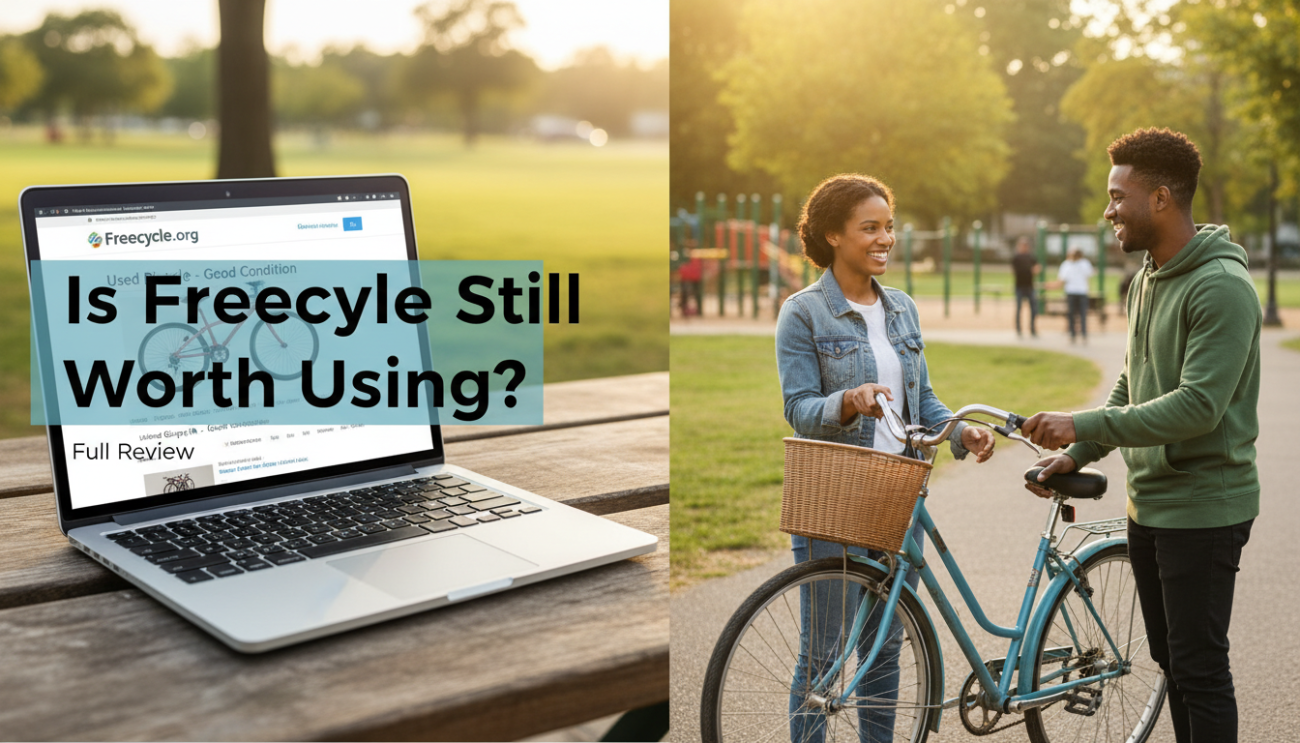
In the world of sustainable living and budget-conscious consumption, few names are as foundational as The Freecycle Network®. Launched in 2003, this grassroots, entirely nonprofit movement was a pioneer in the digital gift economy, aiming to keep usable items out of landfills by connecting people who have things to give with people who need them [1].
But two decades is a long time in the digital world. With the rise of hyper-local Facebook groups, dedicated apps like Olio, and the free sections of platforms like Craigslist and Nextdoor, the question remains: Is Freecycle still worth using in 2026?
This comprehensive review dives into the current state of the platform, its unique value proposition, the real-world constraints, and the crucial trade-offs every user must consider.
Last reviewed on: January 7, 2026. Information and platform policies, particularly group activity, may change over time and vary significantly by region.
Who This Is For / Not For
This guide is for:
- Beginners and early intermediates interested in the gift economy and reducing waste.
- Individuals looking to give away large, bulky, or specific items that charities won’t accept.
- Highly patient and persistent users who prioritize the environmental mission over speed and convenience.
- Those who prefer a non-Facebook platform for their gifting and receiving activities.
This guide may not be for:
- Users seeking immediate results, as the process of posting, waiting for replies, and coordinating pickup can be slow.
- Individuals with low tolerance for no-shows or unreliable communication.
- People looking for high-value, guaranteed items, as the inventory is entirely dependent on local members.
- Those who are uncomfortable with the privacy trade-offs involved in arranging local pickups.
The Freecycle Network: A Foundation Built on Mission
To understand Freecycle’s current relevance, one must first appreciate its core mission. The organization is a registered 501(c)(3) nonprofit, and its model is often compared to that of public broadcasting (PBS), relying on grants, sponsorships, and individual donations to fund its operations [1].
The central tenet is simple: everything must be free, legal, and appropriate for all ages. This strict adherence to a no-selling, no-bartering rule is what sets Freecycle apart from platforms like Facebook Marketplace or Craigslist. It is a pure gift economy, focused entirely on the environmental goal of reducing landfill waste.
The platform operates through over 5,000 local “Town” groups, each managed by volunteer moderators. This decentralized, volunteer-driven structure is both a strength and a weakness, as the quality and activity of a group are entirely dependent on the local community leadership.
Freecycle vs. The Competition: A Comparative Look
Freecycle is no longer the only game in town. Its primary competitors—the Buy Nothing Project and the free sections of major classified sites—have carved out significant market share, often offering a more modern or hyper-local experience.
The table below summarizes the key differences between the major players in the free-stuff economy:
| Platform | Structure & Platform | Key Differentiator | Speed & Convenience |
|---|---|---|---|
| The Freecycle Network | Standalone website (with an app) | Strict nonprofit, no-bartering, no-selling rule. Focus on waste reduction. | Often slower due to volunteer moderation and older interface. |
| Buy Nothing Project | Facebook Groups or dedicated app | Hyper-local, community-building focus, often encourages “gifting” stories and “let it simmer” culture. | Varies, but generally faster posting than Freecycle and more community engagement. |
| Facebook Marketplace (Free) | Facebook platform | Highest visibility and user base, excellent for quick re-homing. | Very fast, but high risk of “flippers” (people taking free items to sell) and spam messages. |
| Craigslist (Free) | Classifieds website | Anonymous, high volume, good for large, bulky items and curb alerts. | Fast posting, but lowest community feel and highest risk of no-shows and safety concerns. |
| Olio | Dedicated app (UK-focused) | Focus on food waste and household items, often used for hyper-local food sharing. | Very fast, excellent for perishable items. |
The Buy Nothing Difference
The Buy Nothing Project emerged as a popular alternative, often operating through Facebook groups. While both share the goal of gifting, Buy Nothing often emphasizes the story behind the gift and the hyper-local nature of the exchange. A key difference noted by users is the “let it simmer” culture in many Buy Nothing groups, where givers wait a day or two before choosing a recipient, rather than giving to the first person who replies [2]. This can be frustrating for those who want an item immediately, but it is intended to promote fairness and community connection.
In contrast, Freecycle is generally more “first come, first served,” and its non-Facebook nature appeals to users who prefer to keep their gifting activities separate from their social media presence.
The Real-World FreeCycle Constraints: Time, Reliability, and Moderation
The biggest challenge with Freecycle, and the gift economy in general, is the gap between the idealistic mission and the messy reality of human interaction. This is where the true cost of “free” becomes apparent.
The Problem of the No-Show
The most common complaint across all free-stuff platforms is the unreliability of users. Community testimonials frequently describe the frustration of arranging a pickup only for the recipient to cancel, reschedule multiple times, or simply never show up [3].
In a discussion on the r/declutter subreddit, one user lamented the pattern: “Will collect today” followed by “Oh sorry, can I collect tomorrow?” and then “Sadly, work got in the way.” This constant rescheduling and eventual no-show is a major pain point for givers who simply want to clear space.
This issue is so prevalent that some givers have resorted to listing items for a nominal fee (e.g., £1) on other platforms just to filter out non-serious people, a clear indication of the time and emotional cost of dealing with unreliable users.
The Regional Lottery
The value of Freecycle is highly dependent on your location. In densely populated areas with active volunteer moderators, Freecycle groups can be a treasure trove of high-quality items and a quick way to re-home your unwanted goods. However, in smaller or less active towns, the platform can feel like a ghost town, with posts going unanswered for days.
This regional variability is a crucial constraint. Before investing time in the platform, a beginner should spend a week or two monitoring their local group’s activity to gauge its usefulness.
Moderation and Platform Speed
Because Freecycle is volunteer-moderated, the speed of posting can be slow. Users accustomed to the instant gratification of social media platforms may find the multi-day approval process frustrating. This is a direct trade-off for the platform’s non-profit, community-controlled structure. While this process ensures that all posts adhere to the strict “free, legal, and appropriate” guidelines, it sacrifices the speed that is often necessary for moving large items quickly.
Trust and Transparency: The Privacy and Security Trade-Offs
The user’s safety and privacy are paramount, and engaging in the gift economy requires a clear-eyed understanding of the risks involved.
The Data Breach Reality
In a significant event that underscores the need for digital caution, The Freecycle Network experienced a major data breach in 2023, affecting over 7 million users [4]. The breach exposed user credentials, including usernames, User IDs, email addresses, and hashed passwords.
While Freecycle took steps to address the breach and urged users to reset their passwords, this event serves as a stark reminder that no online platform is immune to security risks. Users must assume that any personal information they provide to the platform is potentially vulnerable.
The Stranger Danger of Local Pickup
The very nature of Freecycle requires local, in-person exchange. This means users must share their location, either by giving out their home address for a porch pickup or by agreeing to meet a stranger in a public place.
Actionable Guidance for Beginners:
- Never give out your full name, phone number, or exact address in the initial message. Use the platform’s internal messaging system.
- For givers, opt for “porch pickup” where the item is left outside, and the recipient is given a general time window. This minimizes face-to-face interaction.
- For receivers, if you must meet, choose a well-lit, public location (like a police station parking lot or a busy grocery store parking lot) for the exchange.
- Use a separate email address for Freecycle and other online classifieds to protect your primary contact information.
User Testimonials: Successes and Setbacks
The true measure of Freecycle’s worth lies in the experiences of its users. The following are summaries of community experiences, not claims made by the author of this article.
The Success Stories: When Freecycle Works
- Re-homing Bulky Items: Freecycle excels at moving large, difficult-to-donate items. One user successfully gave away a large collection of medical and textbooks when moving out of the country, finding it far easier than trying to sell them individually [5].
- Essential Items for Families: In communities like Houston, Freecycle and similar groups have been reported to help families save thousands of dollars by providing essential items they could not otherwise afford [6].
- The Unexpected Find: Users often report finding high-quality, unexpected items, from functional appliances to niche hobby equipment, that people simply want to re-home quickly.
The Setbacks: The Emotional Cost
- The “Crazy People” Factor: Some long-time users report that the lack of a financial barrier can attract a small percentage of users who are overly demanding, aggressive, or simply unreliable. One user on a UK forum noted that the people with the free time to collect items are often “mental,” highlighting the emotional toll of dealing with difficult exchanges [7].
- The Banning Controversy: The volunteer moderation system, while well-intentioned, can lead to controversial outcomes. One user reported being banned from both Freecycle and a Buy Nothing group for publicly calling out no-shows, illustrating the challenges of enforcing community standards [8].
Conclusion: Is Freecycle Still Worth Using?
The answer is a realistic yes, but with caveats.
Freecycle is not a fast, frictionless, or always reliable service. It is an older platform with a slower, volunteer-driven structure that has been surpassed in convenience by hyper-local Facebook groups and dedicated apps. The platform’s commitment to its non-profit, volunteer-led model is both its greatest strength and its most significant source of friction for the modern user.
However, its worth is not measured in speed or convenience, but in its unwavering commitment to its environmental mission. Freecycle remains a vital, non-profit, non-Facebook alternative for the pure gift economy, offering a necessary alternative for those who reject the data-harvesting models of social media giants. It is a platform for the patient, the environmentally conscious, and the community-minded.
Freecycle is worth using if you:
- Prioritize the environmental mission of keeping items out of the landfill above all else.
- Have patience to deal with slow moderation and the high probability of no-shows.
- Need to re-home items that are too large or specific for traditional charities.
- Prefer a platform that is entirely separate from social media.
By approaching Freecycle with realistic expectations, prioritizing your personal safety, and understanding the trade-offs, you can successfully participate in this pioneering movement and contribute meaningfully to a more sustainable community.
References
[1] The Freecycle Network. (2026). About Freecycle. https://www.freecycle.org/pages/about
[2] Anonymous. (2023, January 30). Buy-nothing group or Freecycle. [Online forum post]. DC Urban Moms and Dads. https://www.dcurbanmom.com/legacy/posts/list/1109567.page
[3] Anonymous. (2024). Weird UK Freecycle experiences? [Online forum post]. Reddit. https://www.reddit.com/r/CasualUK/comments/1de7tej/weird_uk_freecycle_experiences/
[4] Bitdefender. (2023, September 6). Freecycle.org urges 7 million users to reset passwords after major data breach. https://www.bitdefender.com/en-us/blog/hotforsecurity/freecycle-org-urges-7-million-users-to-reset-passwords-after-major-data-breach
[5] ifellicantgetup. (2024). Hey, you guys know about Freecycle.org, right? It’s ALL free stuff. [Online forum post]. Reddit. https://www.reddit.com/r/Adulting/comments/1nqdelm/hey_you_guys_know_about_freecycleorg_right_its/
[6] Click2Houston. (2025, May 23). Families save thousands through Houston’s free exchange groups. https://www.click2houston.com/news/local/2025/05/23/families-save-thousands-through-houstons-free-exchange-groups/
[7] Anonymous. (2024). Weird UK Freecycle experiences? [Online forum post]. Reddit. https://www.reddit.com/r/CasualUK/comments/1de7tej/weird_uk_freecycle_experiences/
[8] League, S. (2024). BANNED! (from Freecycle and Buy Nothing). Medium. https://medium.com/@susanleague_65352/banned-from-freecycle-and-buy-nothing-8171da199303

Sam Reid believes that the best things in life—and the best samples—come to those who know where to look. At AllFreeStuff.com, Sam manages our “Perk Calendar,” tracking thousands of brand-name birthday rewards and seasonal giveaways. With a professional background in community organizing, Sam has a passion for the circular economy, often writing about how to use local “Buy Nothing” groups and Freecycle networks to furnish homes sustainably. Sam’s mission is to ensure that every reader feels empowered to claim the perks they deserve while building a more resourceful community.